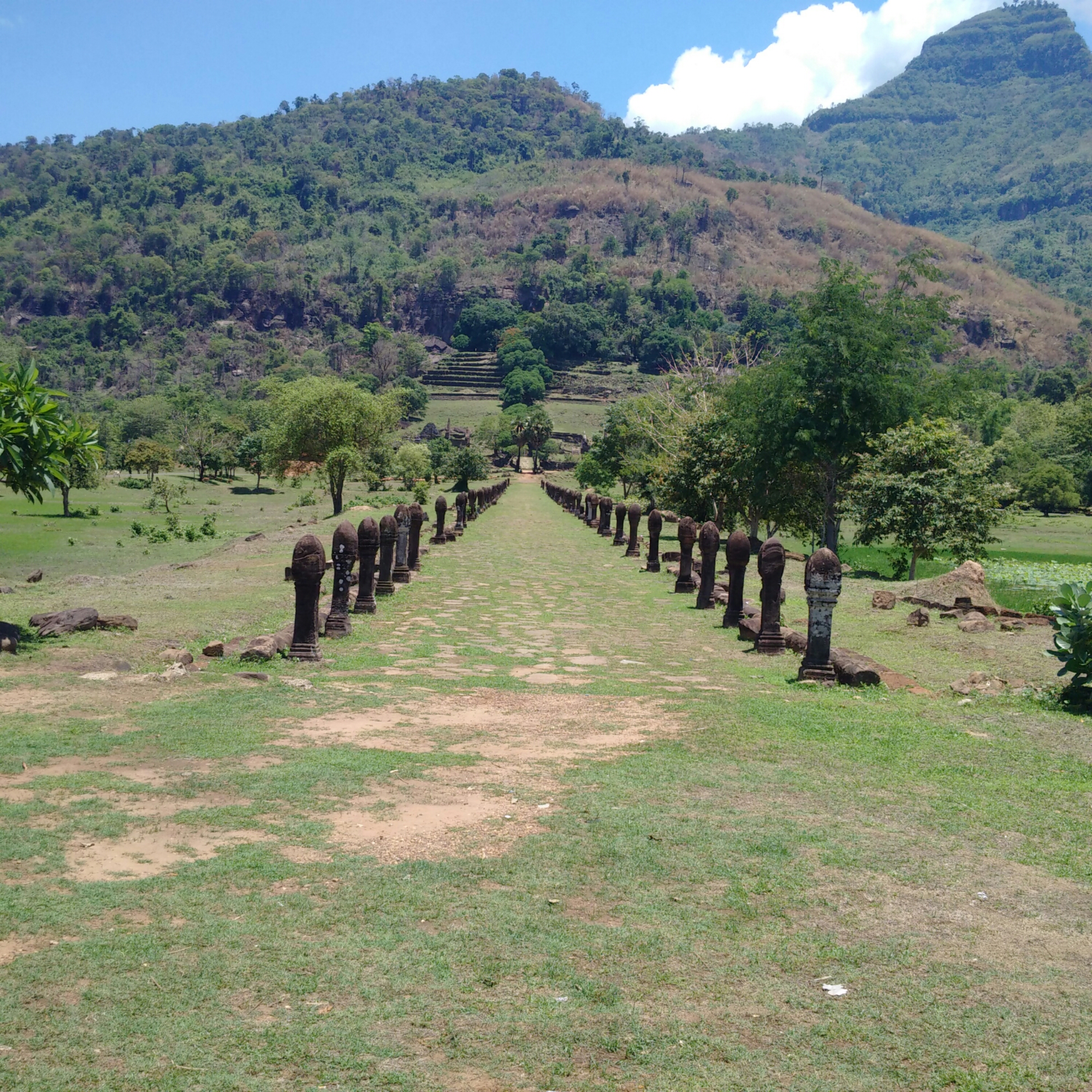
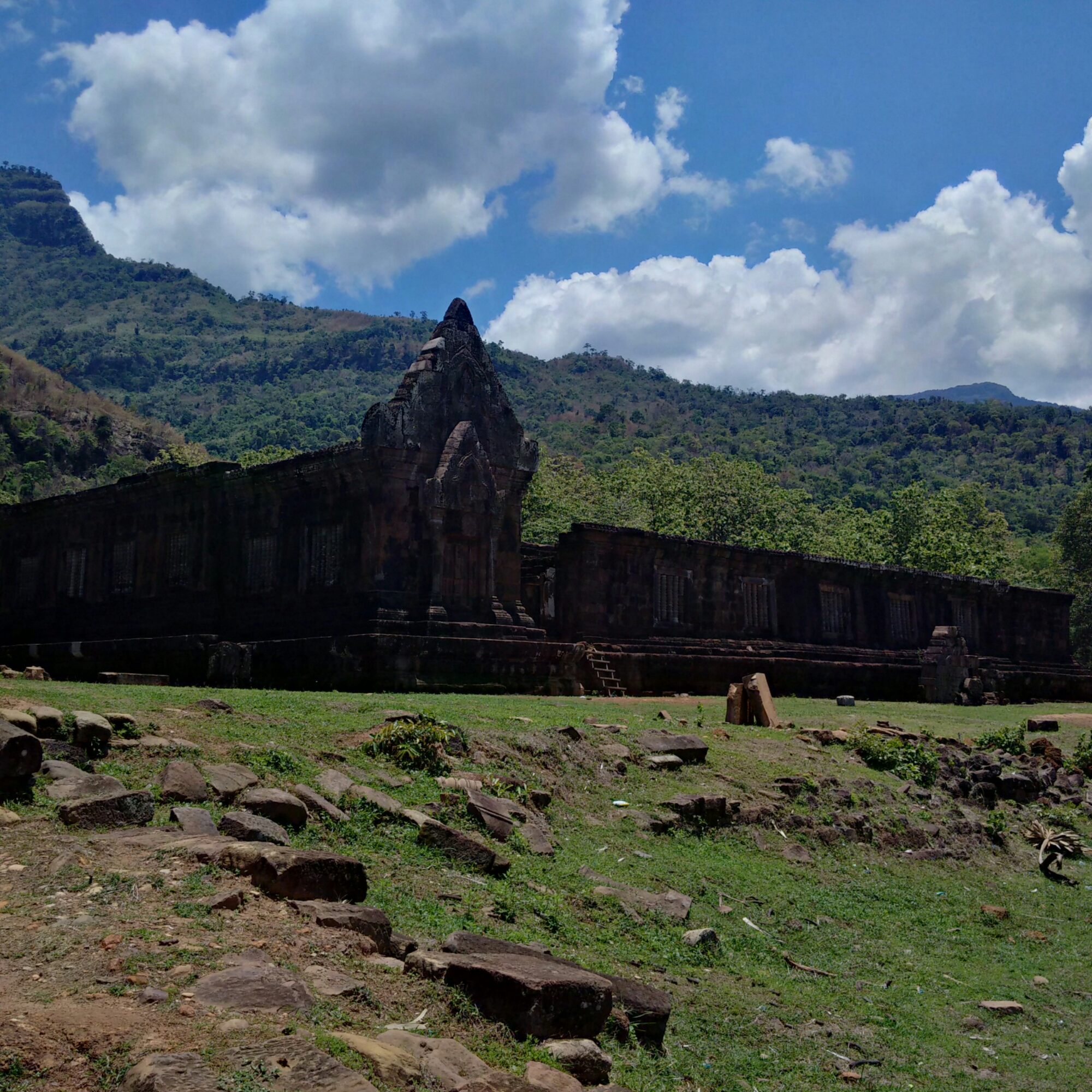
Vat Phu Champasak

One of the most celebrated sites in south east Asia is the Angkor complex is Siem Reap, Cambodia. Tourists descend in their thousands to visit what is without question a bucket list attraction. This brings its own problems, the question of sustainability and damage to the monuments being foremost amongst them. From the selfish point of view it is also a tourist trap, meaning that there is no prospect of having any of the key locations to oneself. This doesn’t and shouldn’t put anyone off, for it is an astonishing place to see. But Angkor is not the only Khmer location, and Vat Phu is a memorable excursion in its own right.

image

I am travelling in low season, certainly, but it was quiet and even peaceful, a reflection of the lesser accessibility and also the lower volume of tourists to Laos, and this region of Laos more specifically.

image

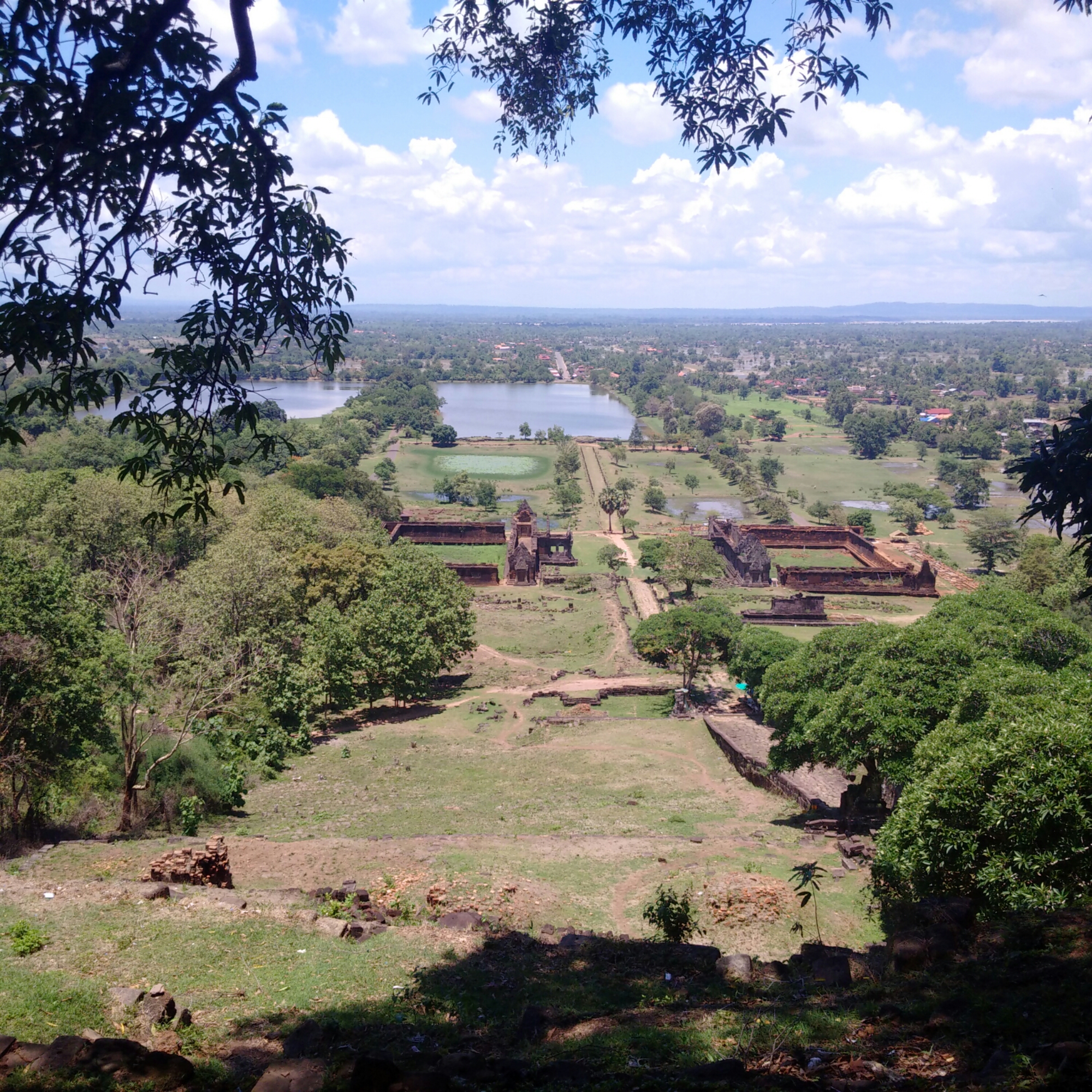
The structures were built on the lower slopes of Phu Pasak which ensures that as you climb, the views become ever more spectacular. It does require a moderate degree of fitness, particularly in the heat of summer. Plenty of water is advised, although a cooling breeze when you reach the top is even more welcome than normal.

image

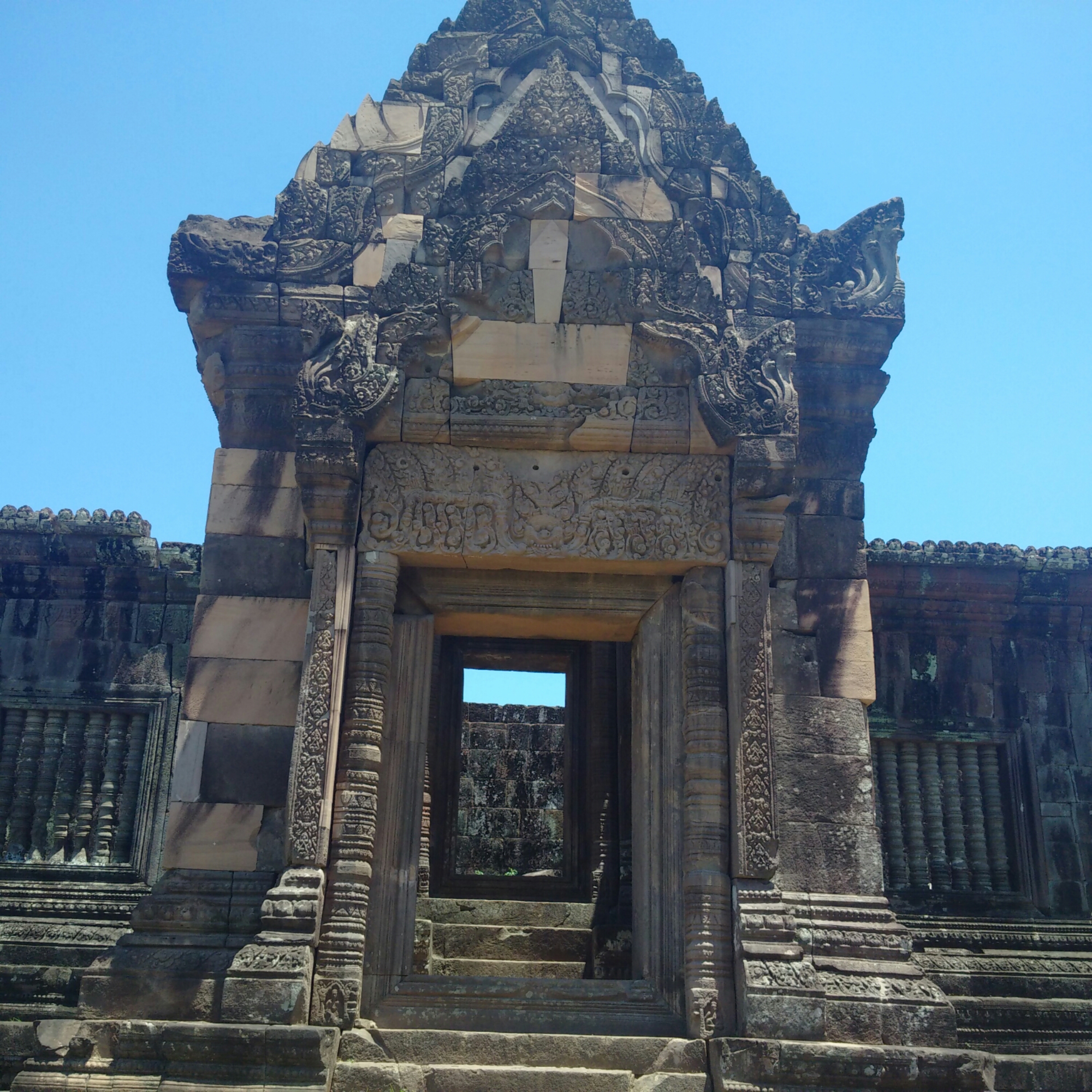
Some of the building was done as early as the 6th century, though the major construction was rather later. It can be seen as something of a precursor to Angkor, and was abandoned before completion.

It isn’t somewhere that rivals its more famous brethren in s

image

cale or ornateness, but the layout and views, as well as wonderful ancient monuments make it somewhere that should be seen and appreciated. The isolation and the relatively low numbers make it even more so. This is a magical place and perhaps more so for being so relatively unknown.

image

As the Laos trip draws to a close, and with so many memories to choose, this was an undoubted highlight.

image

The Bolaven Plateau

Laos is largely mountainous, but there are relatively few plateaus to be found. As such, this one is prized for the fertility of the soils, with coffee and tea being notable produce. It’s also home to a number of different ethic groups, notably the Laven people after whom the region is named. The plateau is elevated to a level of over a thousand metres above sea level, meaning that for most of the year the climate is somewhat cooler and fresher than the surrounding areas. For a western tourist this is most welcome, the temperature being pleasantly warm rather than exceptionally hot.

That is one reason it is worth considering staying here and using it as a base for the surrounding areas rather than Paxse itself. Naturally not all attractions are as close but the peace and quiet appeals, as does the fact that the air conditioning in the room doesn’t need to be on full blast – and doesn’t need to be on at all most of the time.

image

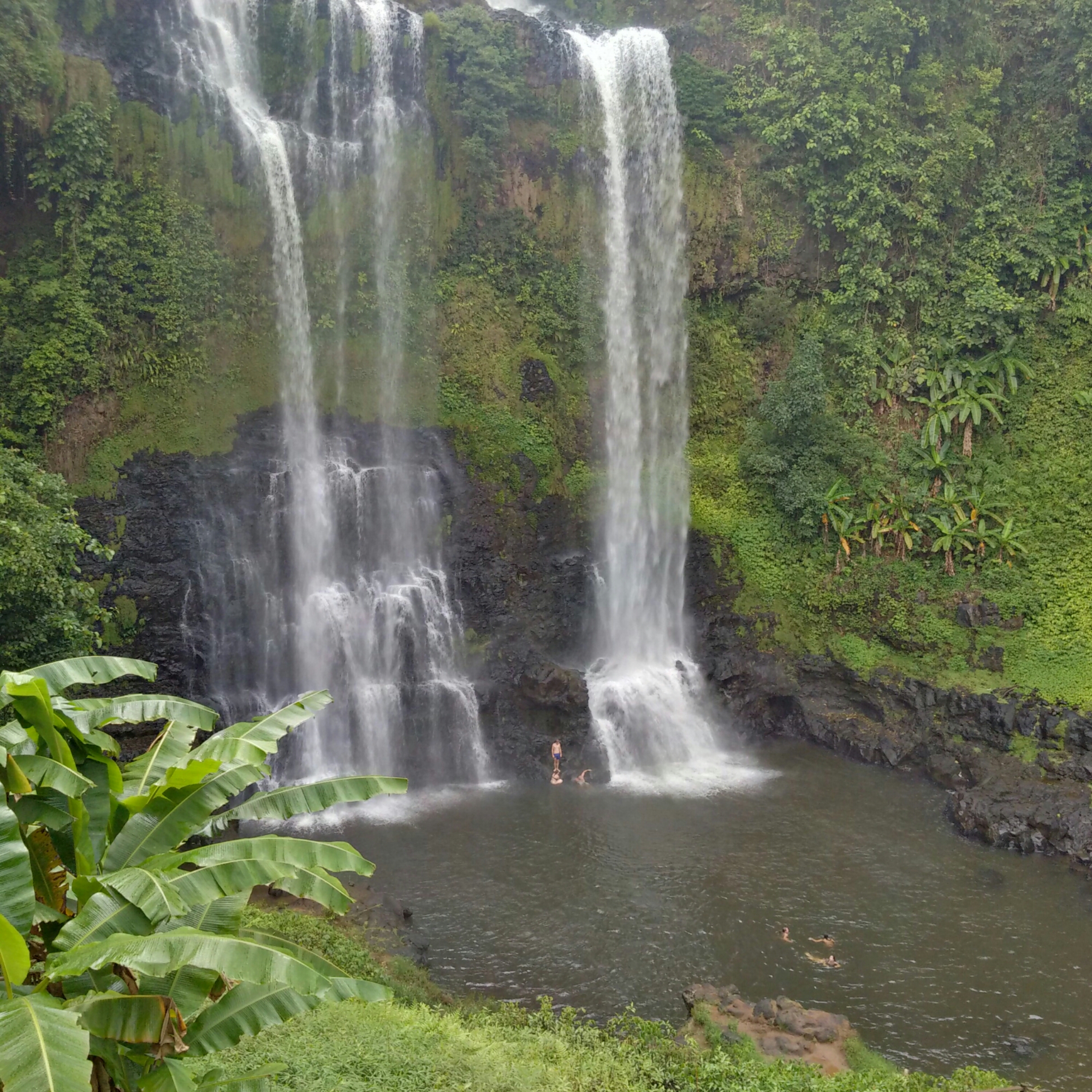
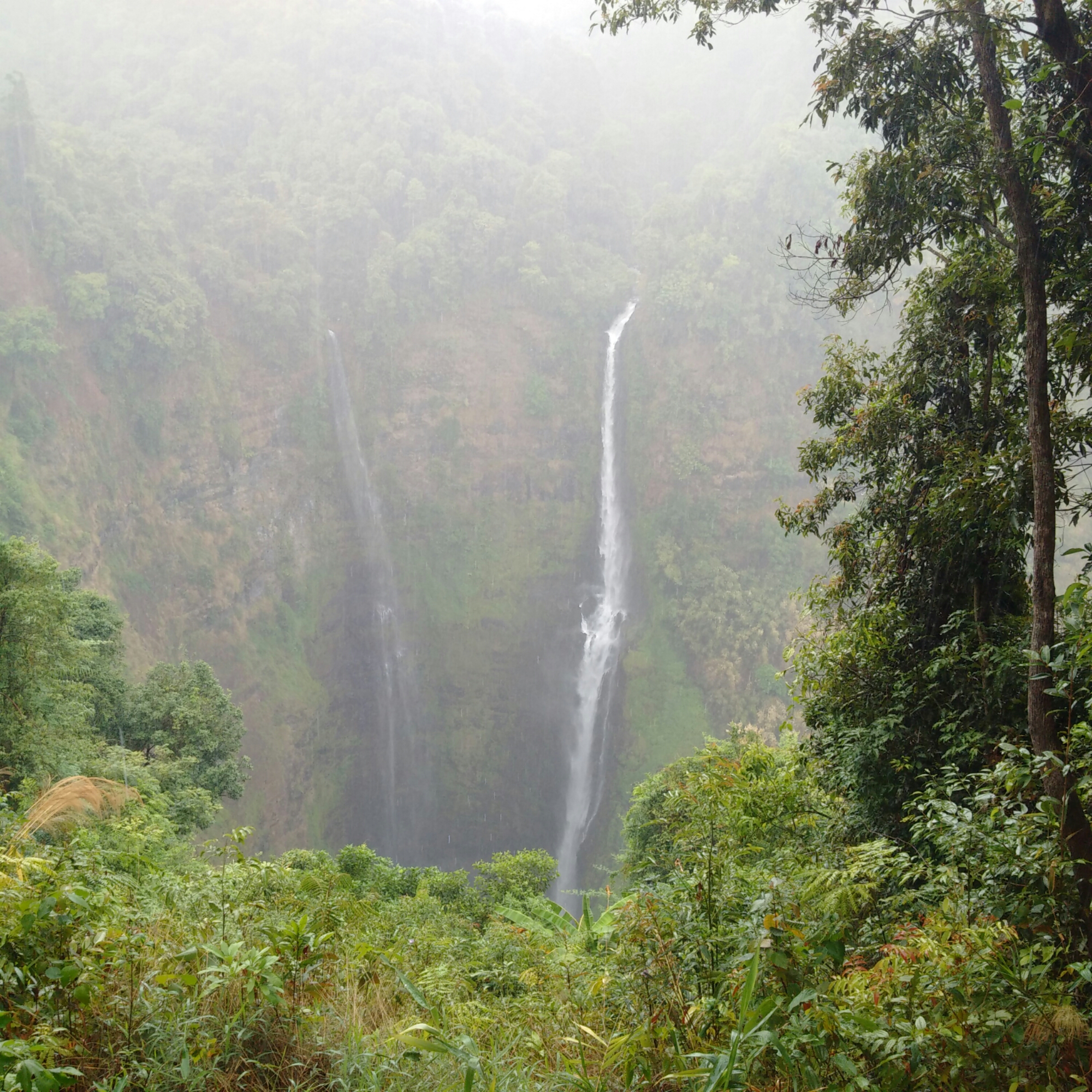
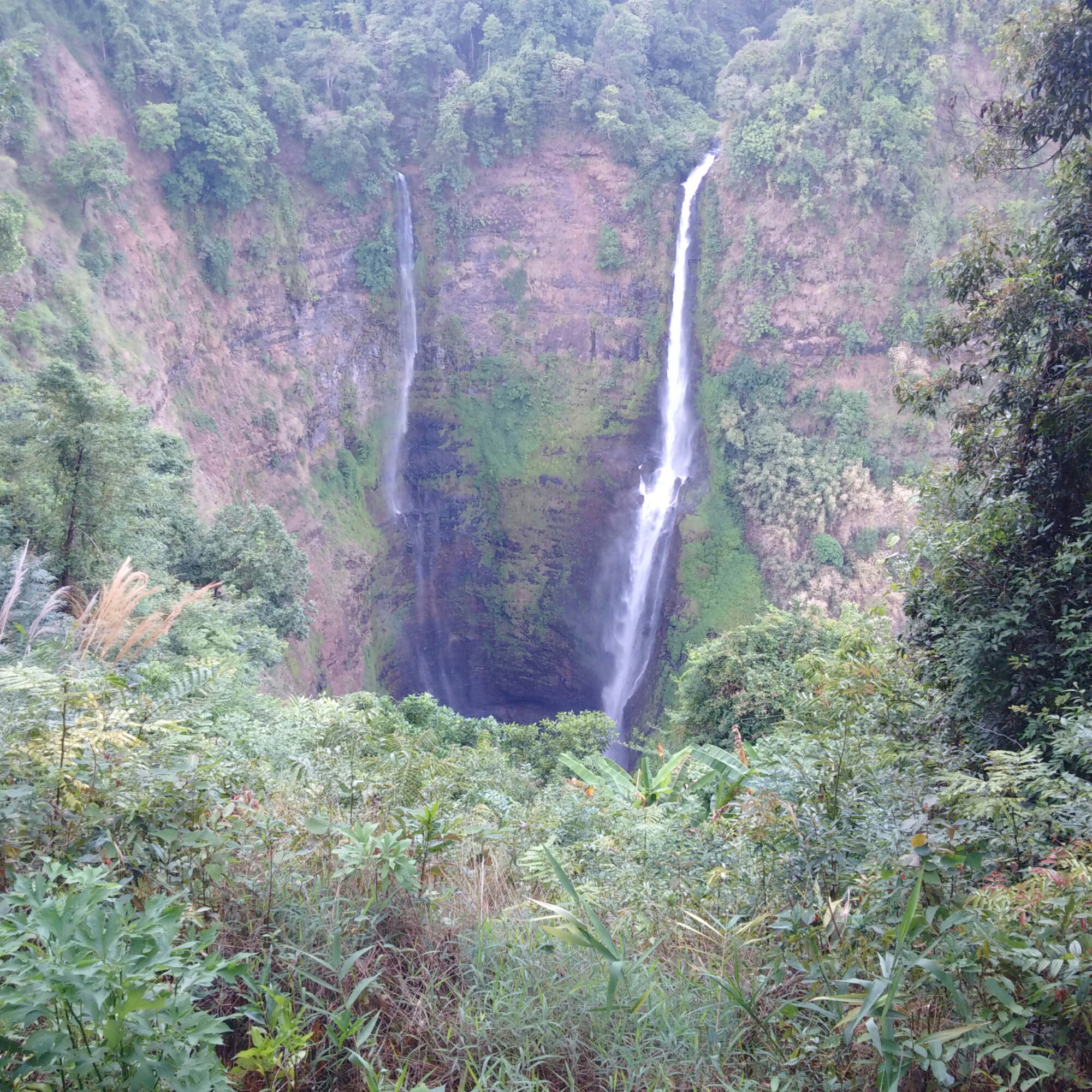
There are of course more waterfalls here, some of which offer the delights of a swim in the pool beneath, but the most famous is the Tad Fane falls, the highest in South East Asia with a drop of 120 metres.

image

image

The flow does depend on the time of year but they remain spectacular year round.

Visiting the local villages and seeing the way of life is another attraction, while many of the coffee and tea plantations welcome visitors to see the process and of course most of all, sample the produce. Real coffee isn’t as widespread in Laos as might be hoped for, so it becomes something of a treat to taste the real stuff.

Waterfalls and Islands

From the title, those with some knowledge of their geography may be scratching their heads, given that Laos is a landlocked country. But the islands referred to are in the middle of the Mekong River, and there are four thousand of them – presumably a clever soul will in future create a salad dressing four times as good as any other?.

The largest of them is Don Khong, several kilometres long and wide, and a popular location for tourism. The river itself is, as so often, the principal attraction, for it gives life to the region and provides the most beautiful of backdrops for the visitor. Most activities are driven by the surrounding waters, such as heading off the southern tip of it hoping to see the Irrawaddy River Dolphin. This is a critically endangered animal, it’s survival prospects not helped by the damming of the river at various points. Tourism has often enough assisted with the preservation of species by making their survival valuable (in the interests of balance, tourism has damaged the ecosystem at least as often) and perhaps that may turn out to be the case here. It is to be hoped so at least.

image

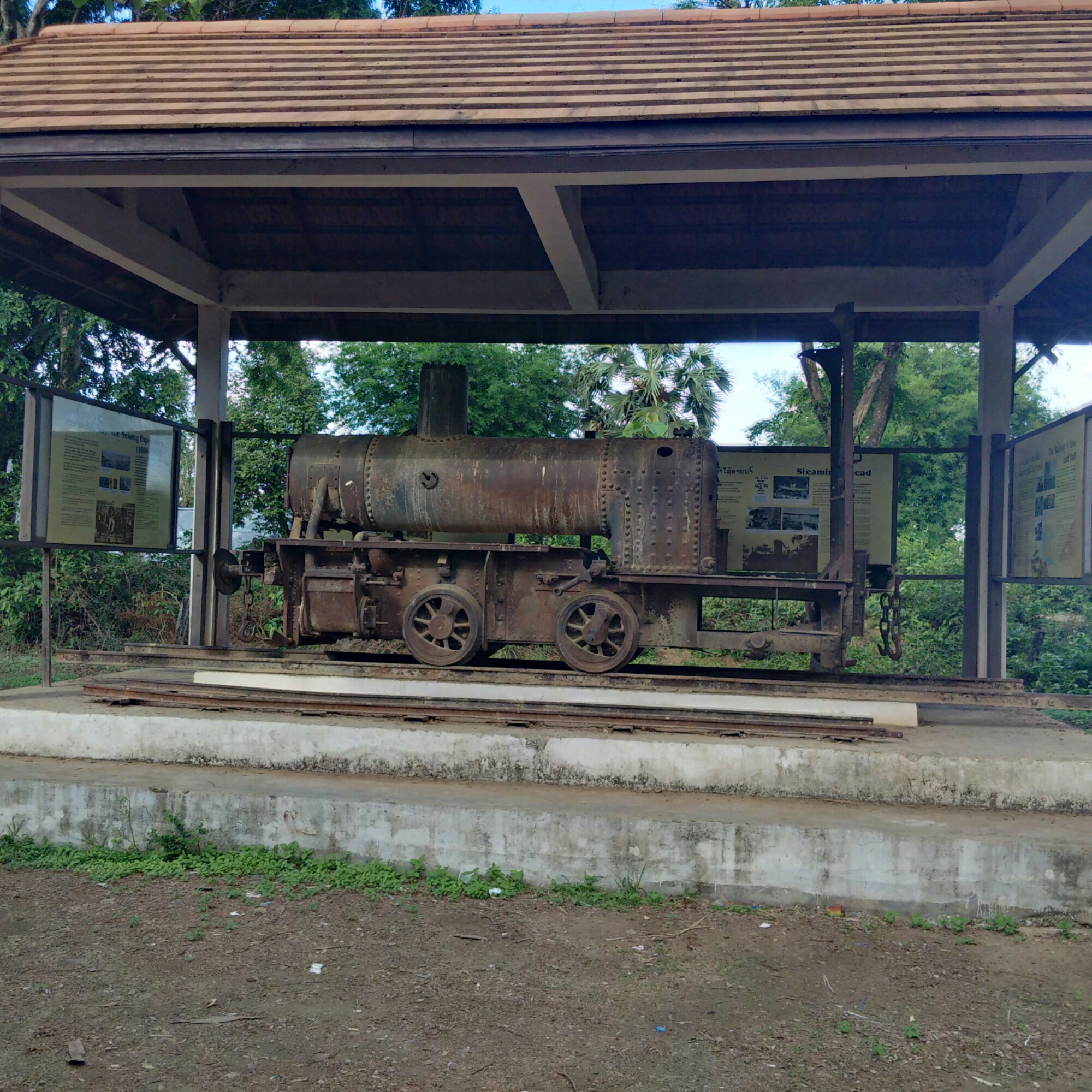
Access to the southern tip of the island is via Tuk Tuk, which follows the path of the old railway built by the French who were looking to use the Mekong to develop trade.

The railways wasn’t a commercial success and fell out of use. The tracks have long gone, removed for fencing and construction in the area. The locomotive is still extant and can be seen next to where the line ran, and the derrick platforms on the river can too be seen. There are some plans to rebuild the railway along the old route and from a tourist perspective this would both make sense and would be a specific attraction in its own right were they to utilise the old equipment.

image

The reason why the railway was needed was because of the waterfalls that made navigating up the river impossible. There are numerous examples of large scale falls throughout the region that is centred on Paxse and the ones at Don Khong are large,  impressive and numerous comprising a 13km long stretch of rapids. The best by some distance and the largest are those at Khon Phapheng near the village of Ban Thakho. They are undoubtedly spectacular, and have the added advantage of not having suffered from any attempt at “improvement” of the natural wonder. By Lao standards, entry is quite expensive at 55,000 Kip, but it still only amounts to £4 and is a must see.

image

image

Waterfalls are wonderfully impressive no matter how many you see. The simple truth of it is that seeing them is the thing, talking about them not so much.

Food

It’s obviously a necessity, and at its best it can make a trip, but it’s also the subject that can put people off, make them change their destination or even stay at home in extreme cases. The food of the destination you choose to visit can be the most exquisite memory you return with, or indeed it can be the dinner table/pub complaint about hideously awful it was.

So what to make of Laos food? Well firstly if you’re planning on spending any time here you do need to like Asian food. You aren’t going to find a McDonald’s or KFC anywhere – it simply isn’t going to happen, in contrast to somewhere like Thailand. In the resorts of the bigger towns and cities you will find western food – of a sort – so a steak is by no means out of the question in those places. But when touring and finding lunch, it’s going to be Lao, or at a push Thai or Vietnamese influenced. For many travellers this is in itself part of the charm of it. You can find a place such as Seno (supposedly named by the French from Sud, Est, Nord, Ouest since it sits at a crosroads) and find the entire main street is given over to grilled chicken, the local speciality.

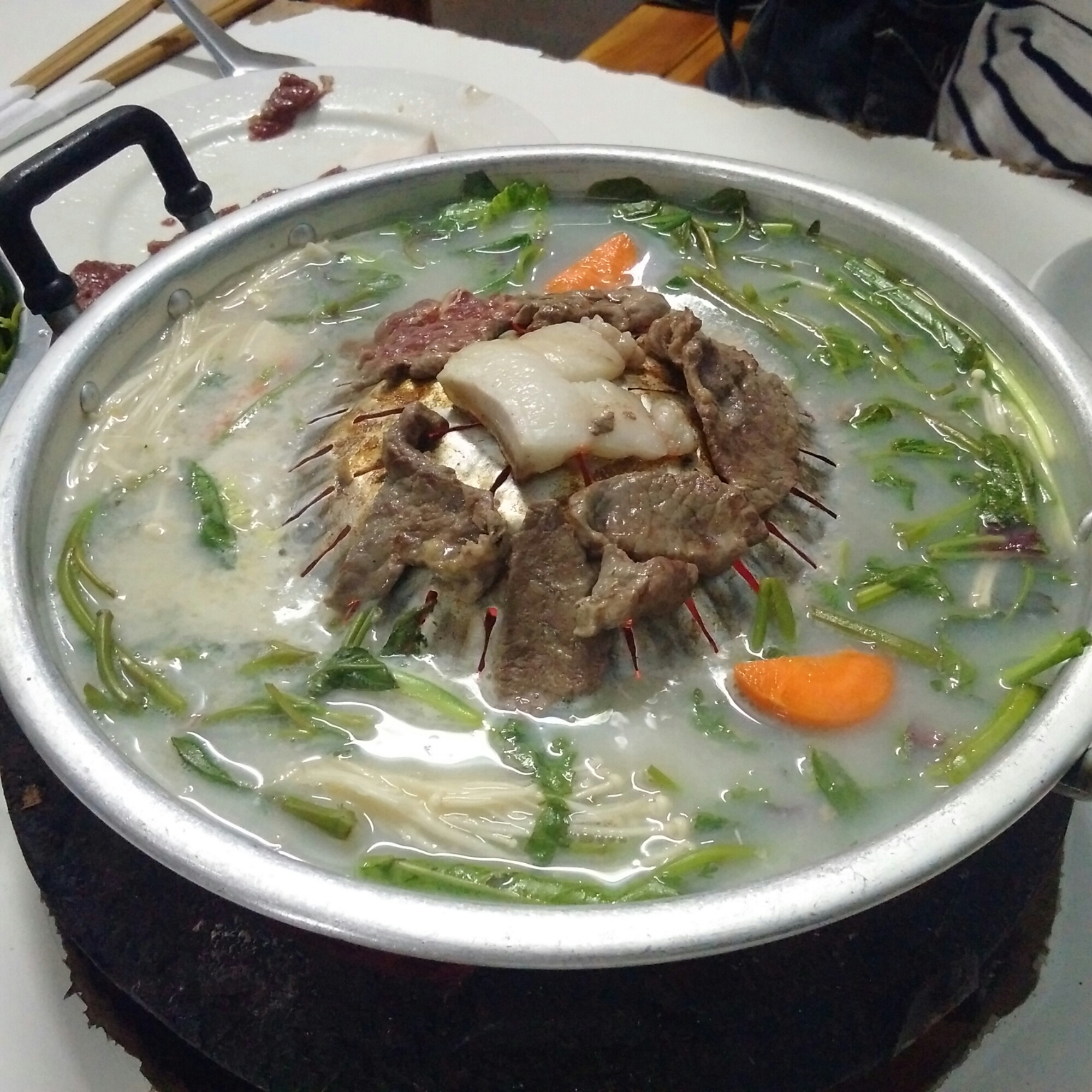
Perhaps you can be tempted by the Lao version of a barbecue, which if anything is most reminiscent of a Swiss raclette where the meat is served raw and you cook it yourself on a central heated section that warms the soup surrounding it. That was a lot of fun actually.

image

For those terrified of hot food, there is little to fear. Lao cuisine is more reminiscent of Vietnamese food than Thai, based around soups comprised of whatever ingredients are to hand, or fried rice dishes that again will be dished up with greens that can either be eaten separately or mixed in the main meal. If you do wish for something with a little more kick, the chili is abundant but served on the side to provide a little extra spice….er. Ok quite a lot of extra spice. This not like adding supermarket chili flakes, so be gentle with your mixing in the main meal. This is fiery stuff, a little is sufficient and add to it as needed, don’t overdo it and find you can’t eat it. This not an idle warning, it’s dynamite. But you’ll soon learn the right amount to add, if you do like heat you’ll be in heaven. If you don’t, skip it and enjoy the flavours.

That’s not to say there aren’t things to try for the more adventurous. Some local specialities fully satisfy any wish to do something different. How much more different can it get?

image

For the record those are assorted insects. And also for the record that isn’t my hand – as a lefty I can guarantee that – now I quite like trying things. But there are limits. And eating roasted insects is it. To my considerable amusement the look of appalled horror on the faces of my colleagues as one hotelier insisted I try the duck (very good – more on that property later) passed without any sense of irony given their propensity to ingest creatures normally the preserve of the cat before you can stop him. Yep, it’s western values I’m afraid, deal with it.

I don’t want to give the impression this is the norm. You really aren’t going to be randomly presented with these things. But like many places the phrase “local delicacy” roughly translates as “you are out of your minds. No. Just no”.

The food is really good. A decent company will ensure you visit local places and you’ll get to try the local variations on the central theme. It’s delicious, and it should cater for most tastes. Lao restaurants are not exactly commonplace in Europe or the US, so it will be a new experience. And one to savour in all respects.

JAFT…

Which stands for Just Another Flipping Temple of course.

image

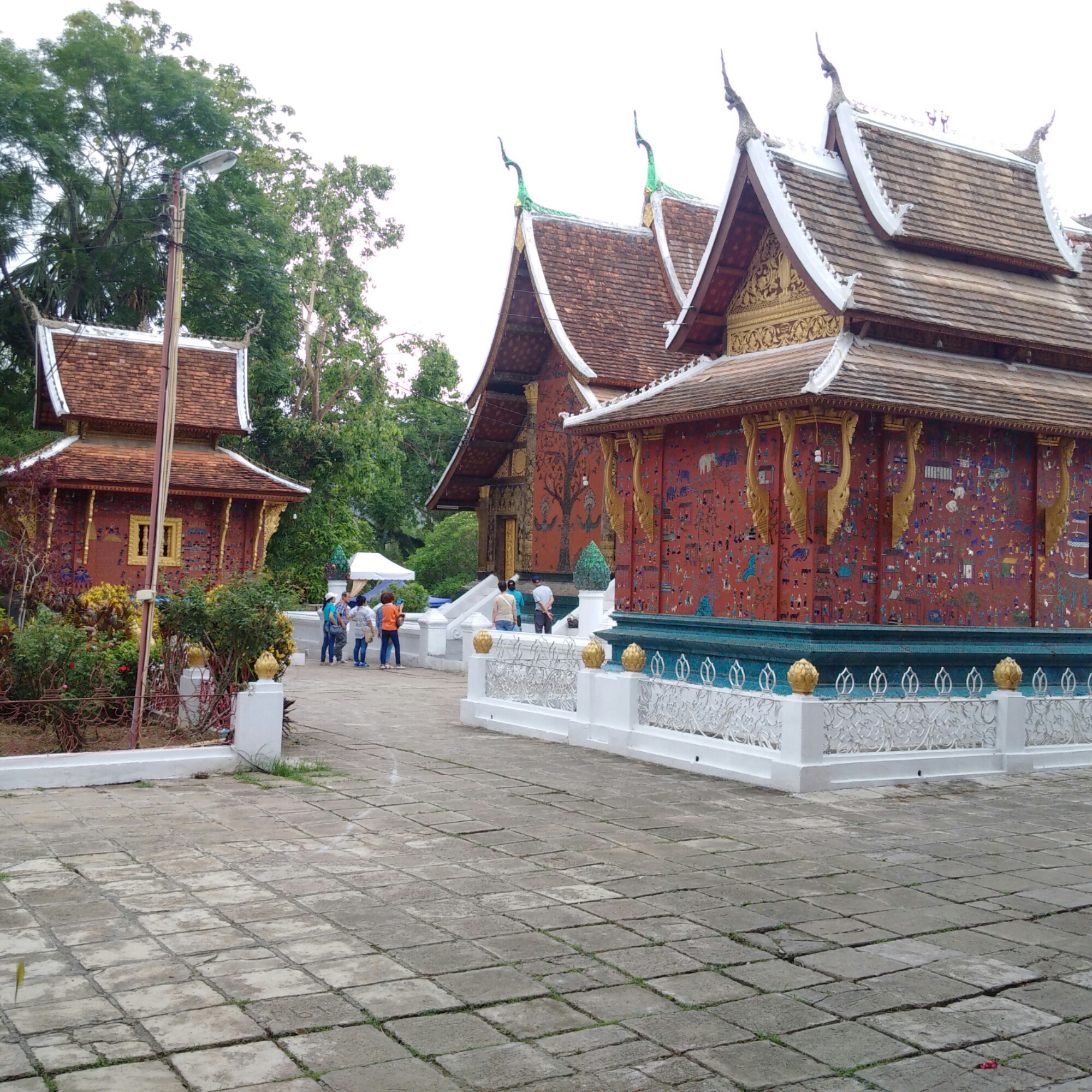
Ah yes, temple fatigue. It afflicts all travellers to the region save perhaps those who come specifically seeking spiritual enlightenment. Laos is not as heavy in this regard as somewhere like Myanmar is, but as with so many countries the world over, religion has played a major role in the history of the nation. The visual sites and sights are not so much the point as the context it provides to the story of Laos.

Luang Prabang itself is the place most visited and with by far the greatest number of temples and monuments. Even the most avid fan will find more than enough to satisfy, and in truth most visitors from the west at least would get bored long before the supply of sites was exhausted. This where the context comes in, gaining an understanding of the role played in Lao life up to the present day provides a better understanding than simply looking at pretty buildings ever could. This is why a guide to countries like these is so important, for without one you are left merely looking at pretty buildings.

image

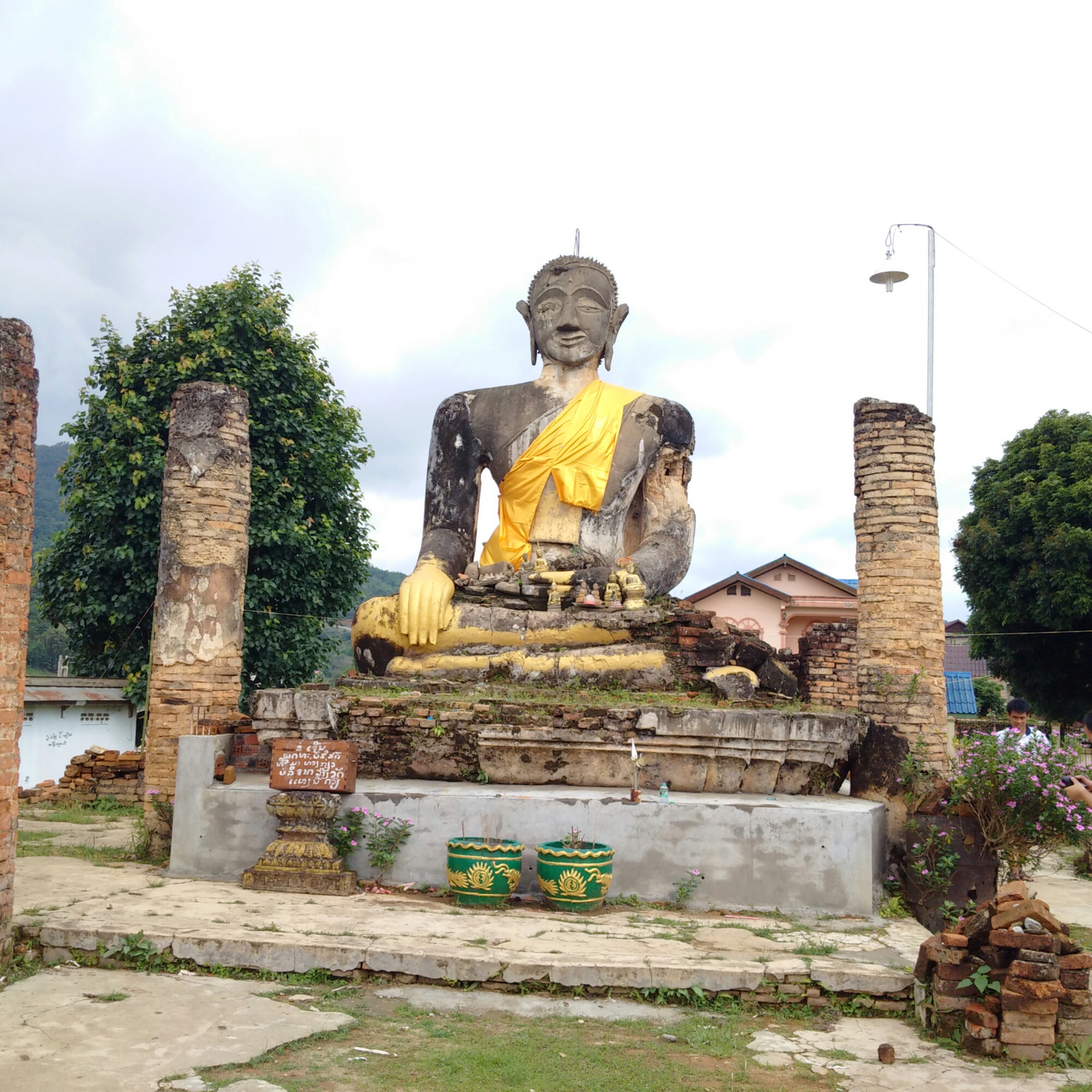
Equally, when travelling you come across places such as Phiawat temple, extremely historic but destroyed in the civil war and left as a ruin to issue a reminder that damage to historical landmarks is not confined to distant history.

image

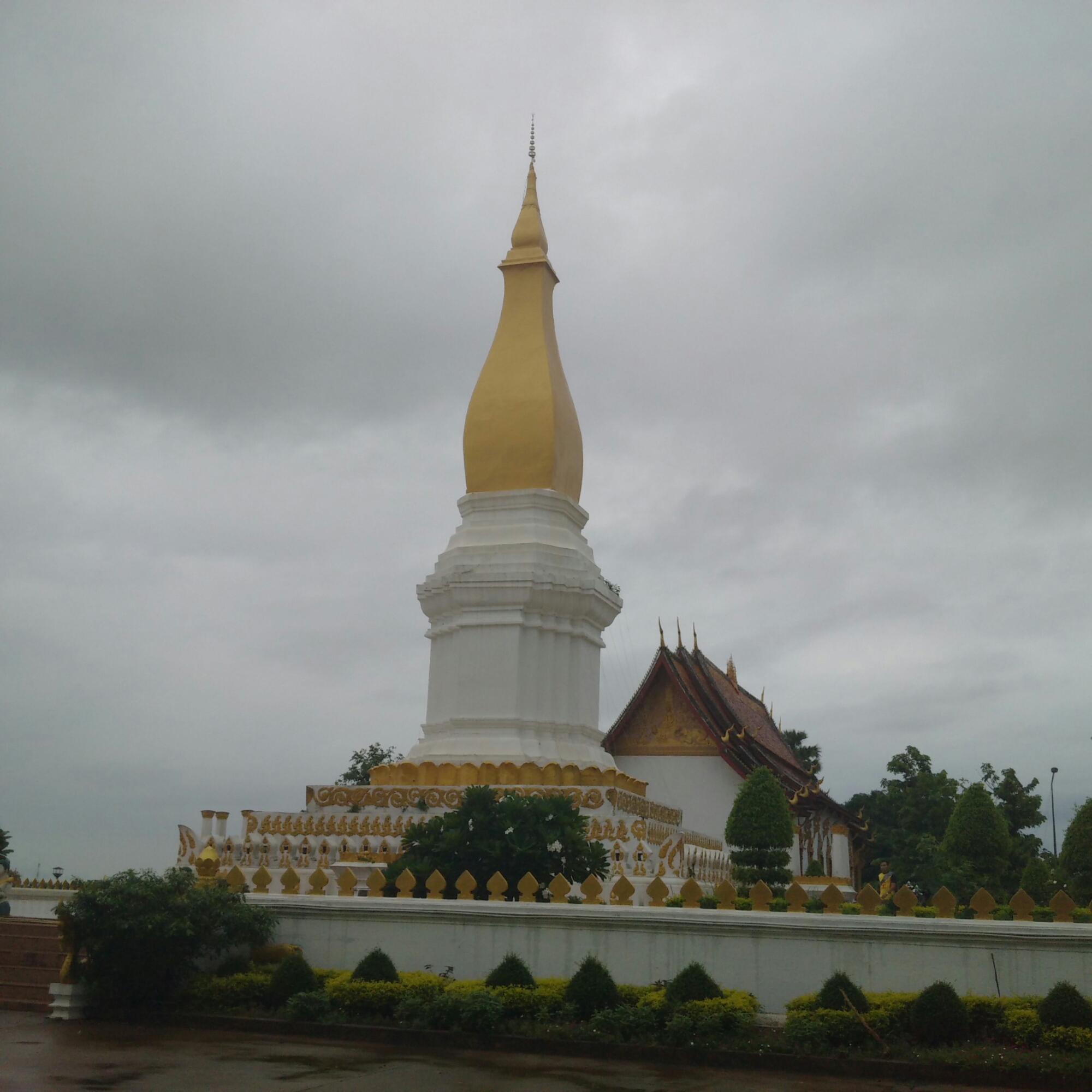
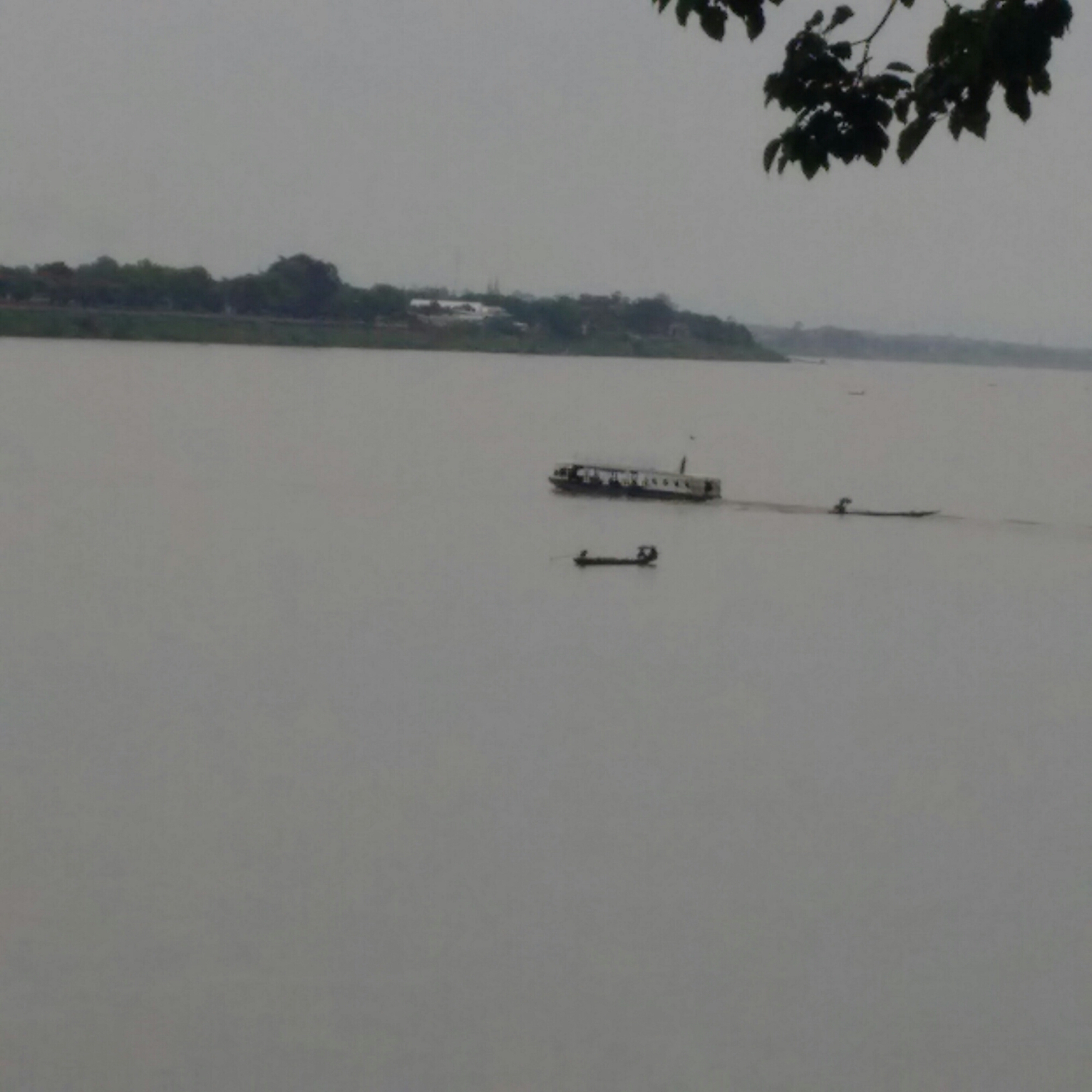
Wat Pha That Sikhottabong, located on the Mekong riverbank and 6 km away from Tha Khek also offers the pointed lesson about the past, for the whole town faces across the river towards Thailand, forbidden land for many years under the Lao government, to the point that troops were deployed to prevent crossings. Not quite the Berlin Wall, but a barrier nonetheless.

image

image

It’s true that Buddhists will get more from a visit to each one, but it’s still intriguing for the casual visitor. In Hang stupa is an impressive sight and an important holy place, while the realisation that Savannakhet is a lesser Luang Prabang is rather startling.

image

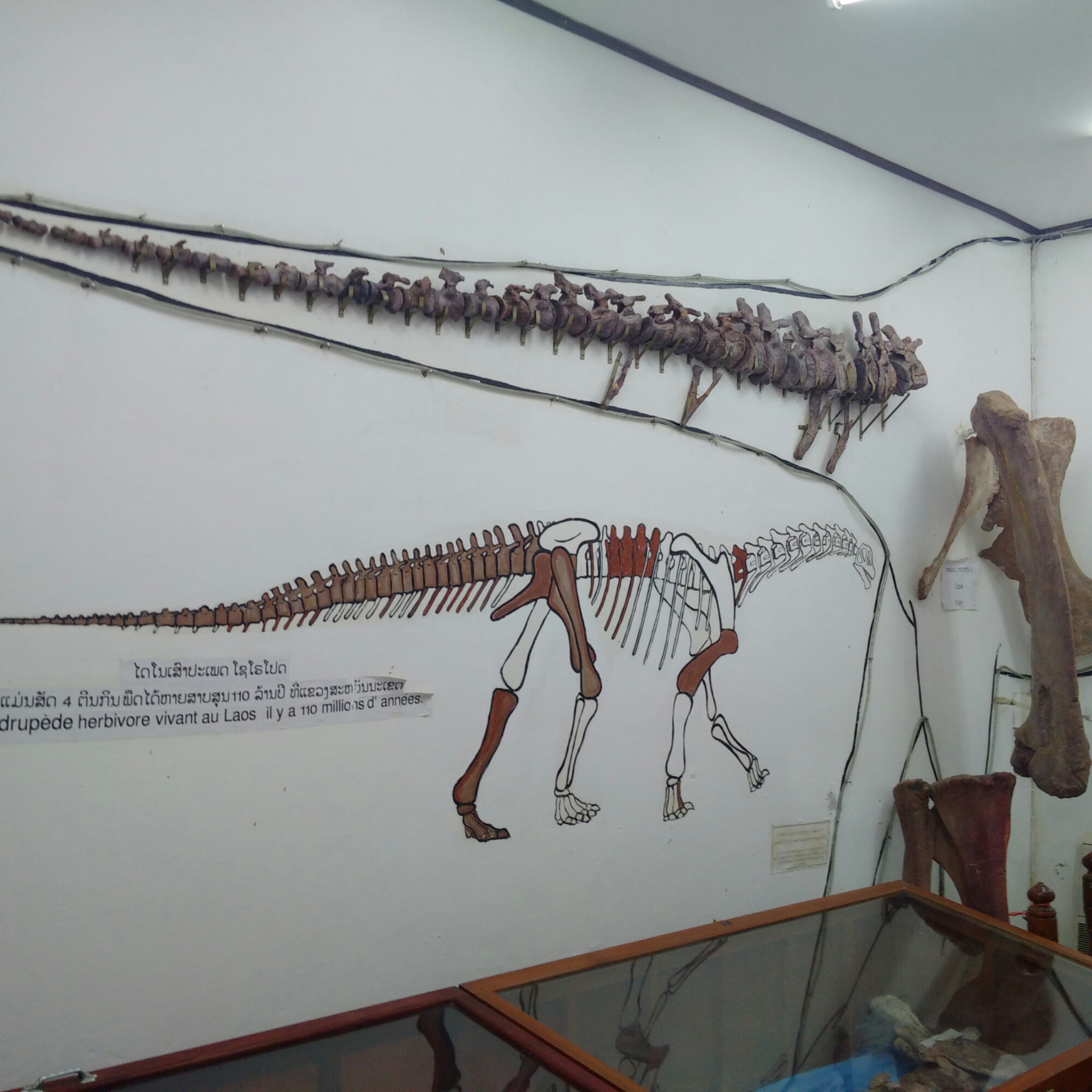
If a list were to be compiled of most surprising things to visit in rural Laos, it would have to include a temple of another kind in Savannakhet itself – one to learning. It may not exactly be comparable to the Smithsonian or the Natural History museums, but the prosaically named Science and Technology Department is all about dinosaurs, given the fossil discoveries made across Laos. It won’t be a long visit, and it certainly doesn’t cost much (10,000 kip) but it’s worth seeing for the exhibits.

image

image

Temples are part of the history and life of countries like Laos. You can overdo it, and that spoils the experience somewhat. Be sparing, appreciate them for what they are and they remain fascinating.

Tham Kong Lor caves

When I was a child I vaguely recall reading an Enid Blyton book where the child protagonists made an escape from their dastardly captors through an underwater river. The tale is long forgotten, but I do thoroughly recall the excitement of it to that young mind. If travel is to be about new experiences, then this certainly counts. For that youthful read is something I haven’t thought about for 30 years, and probably won’t think about for another 30, yet an underground river holds a endless fascination.

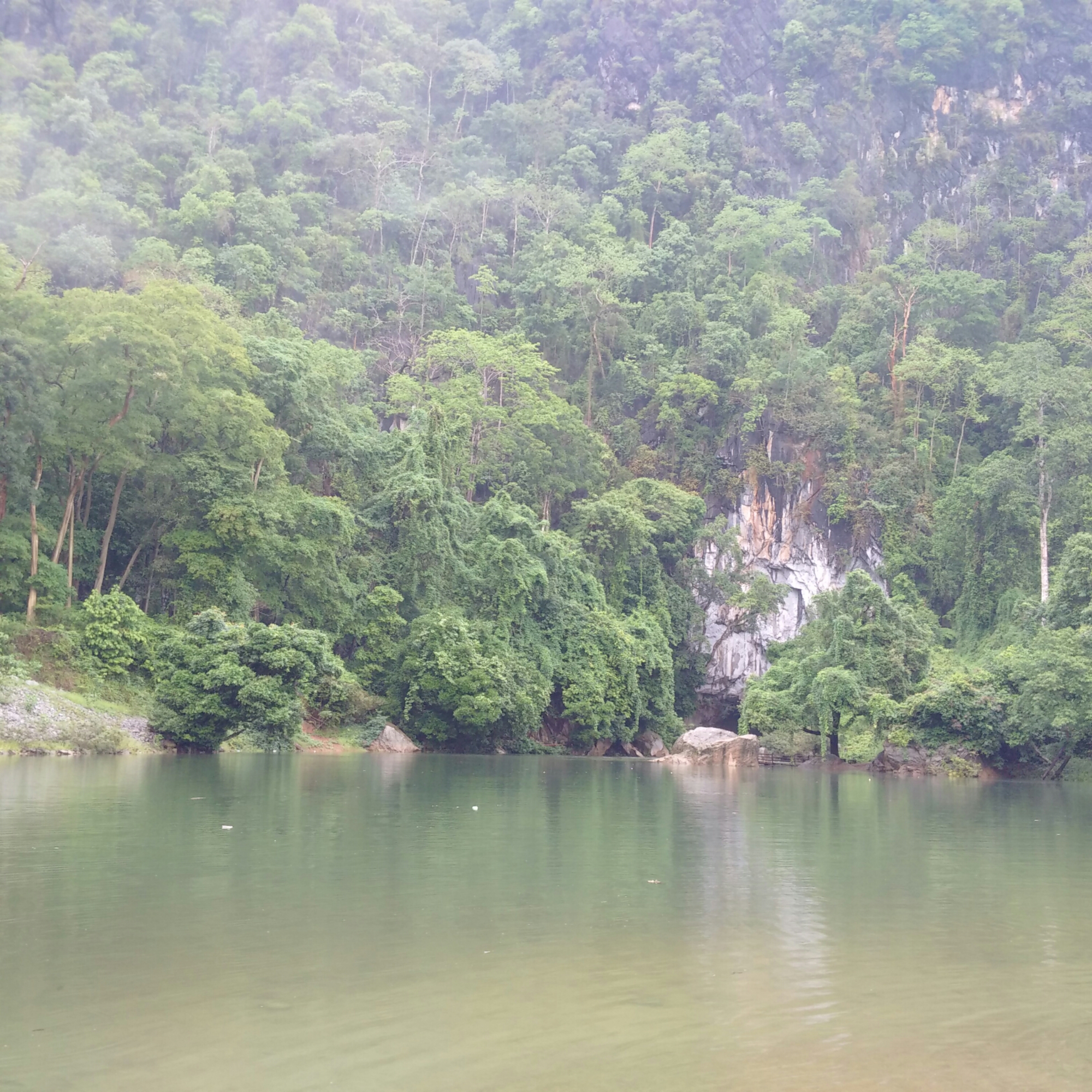
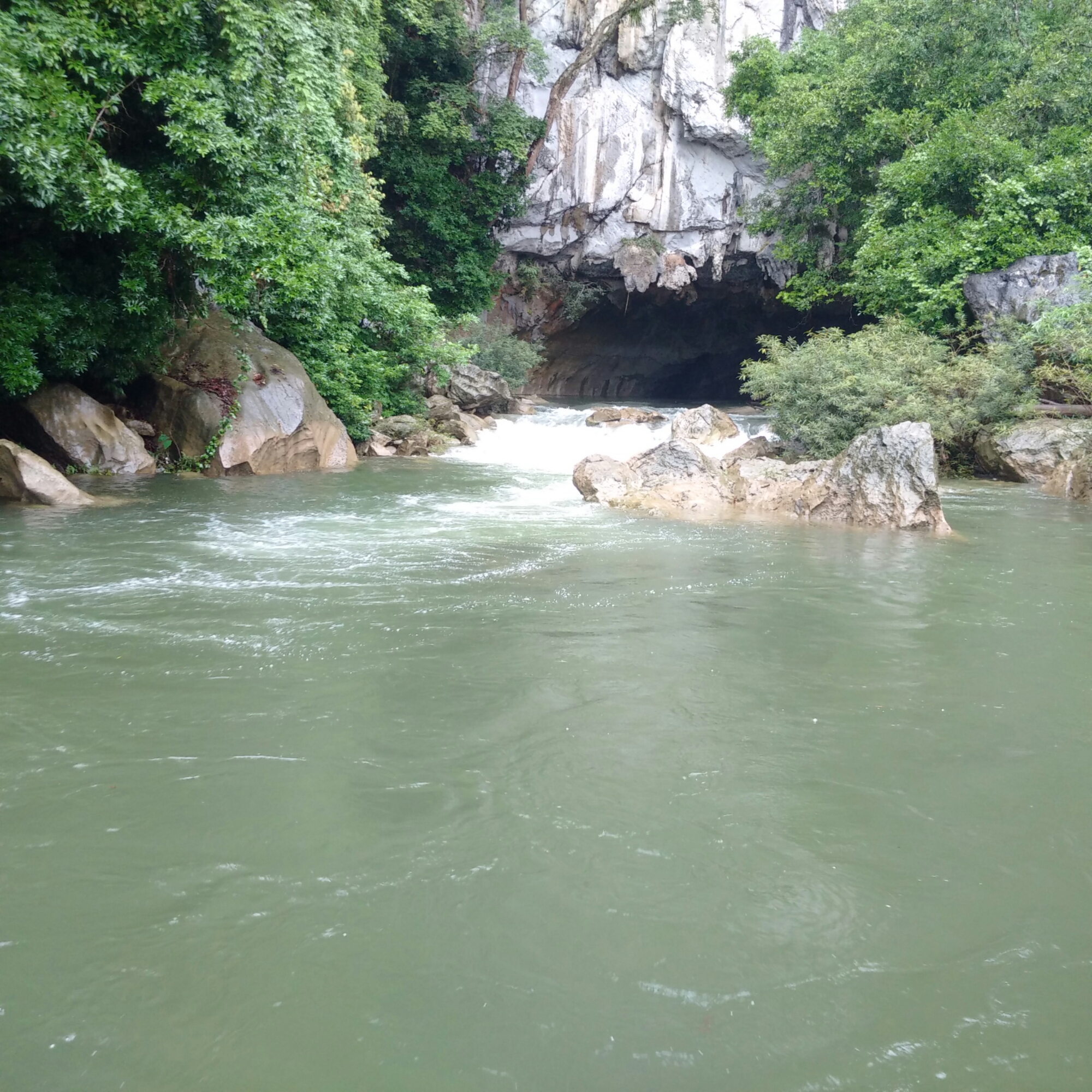
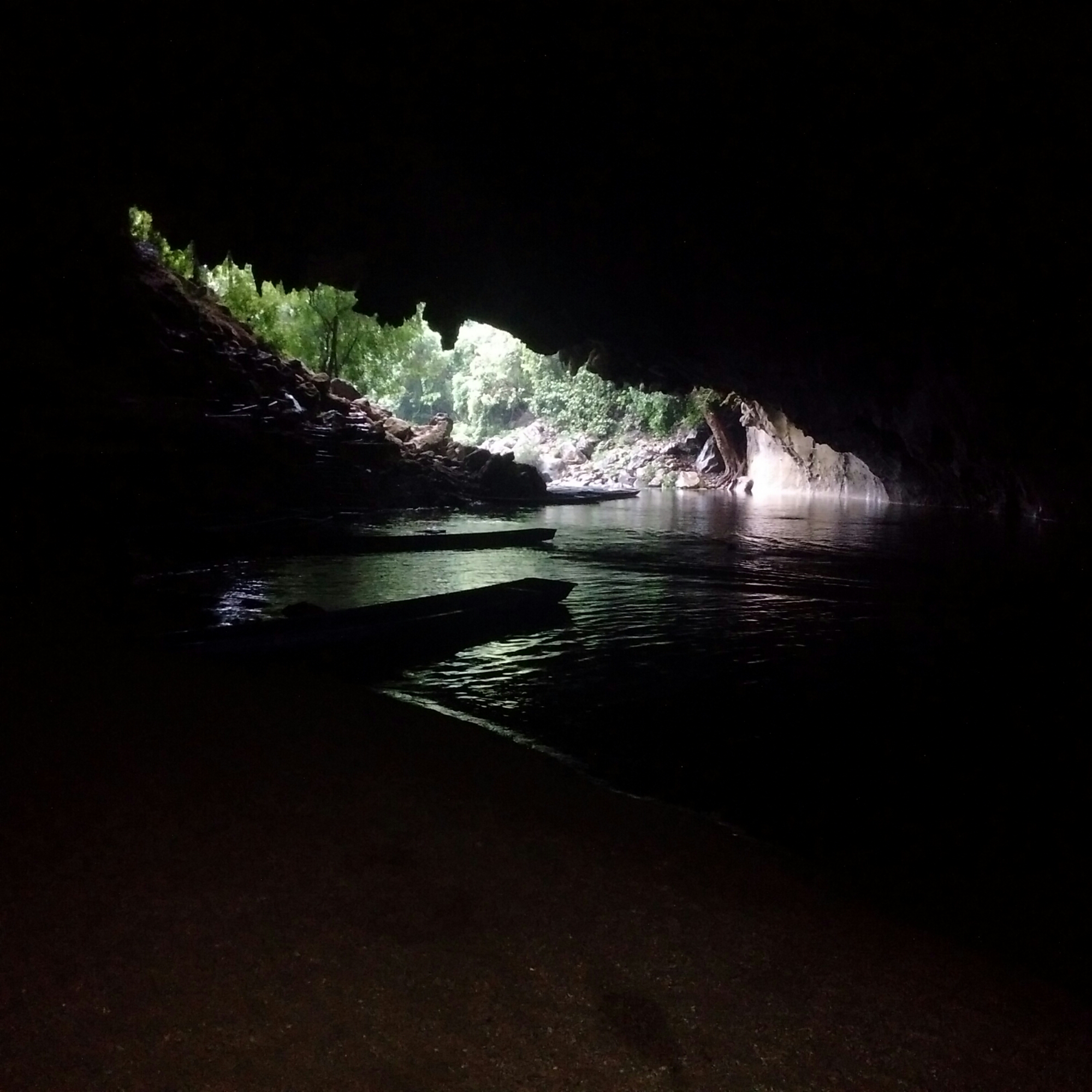
The Kong Lor caves are an undoubted highlight of any trip to the region. Located in Phou Hinboun Nbca, they  arch over an 8 kilometre long underwater river. The entrance itself is truly beautiful, the river flowing out into a large pool with an impressive mountain backdrop. Within there are stalactites and stalagmites aplenty, with each cavern spacious and spectacular and the Naga Palace in particular taking the breath away. In order to reach each one you travel by boat, and if there’s one thing which is at once both surprising and very obvious, it is that it’s extremely dark inside. Apart from the torch of the boatman, the only sensations are the motion of the craft and the sounds of the water rushing by.

image

To that end it’s important to remember you are going to get wet walking to an from the boat through the shallows, so dress accordingly. The warm weather means you soon dry off but flip flops and shorts are the order of the day.

image

The caves are normally lit, but power is unreliable and in many ways seeing it in the darkness with torches flashing is the best experience of all.

image

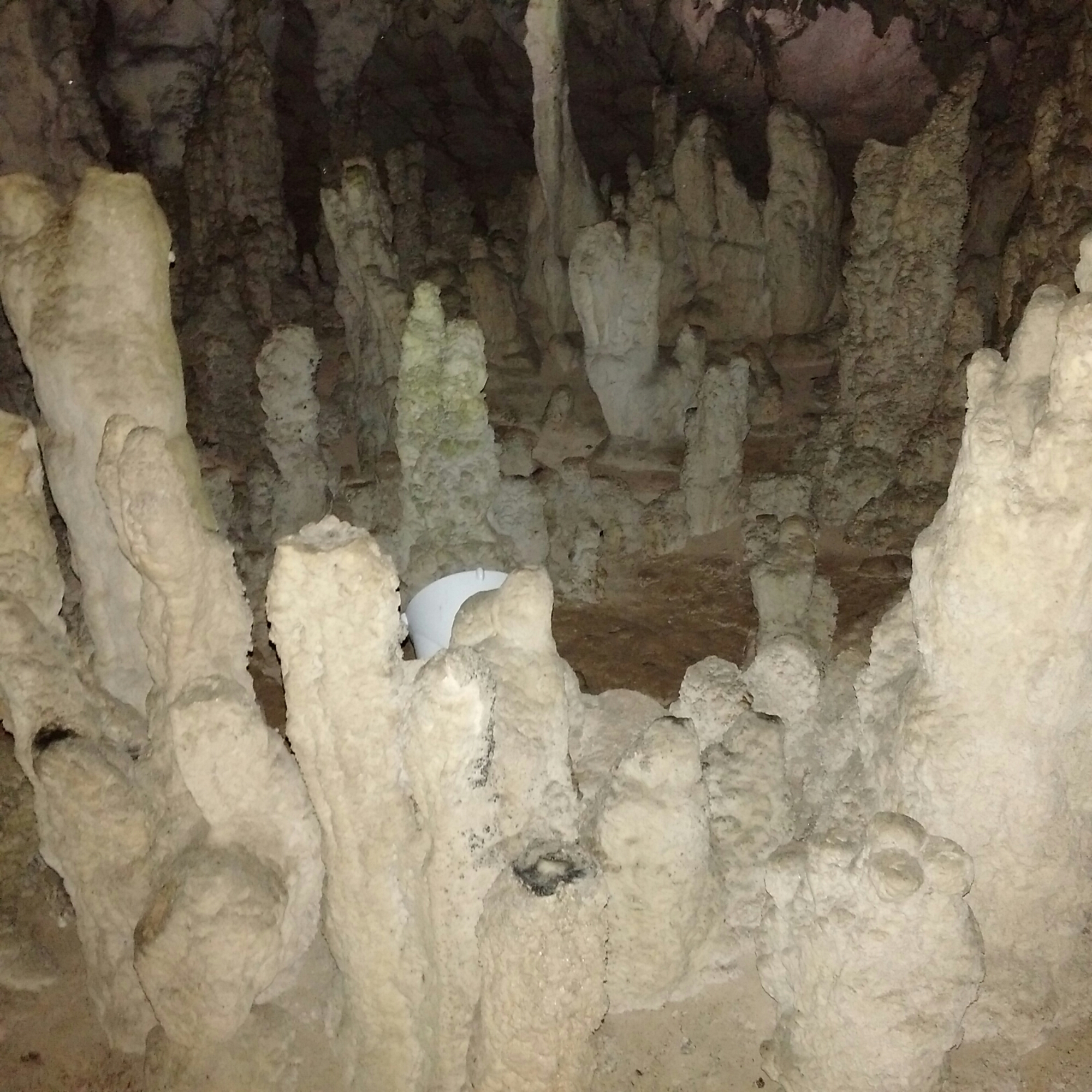
Within you have no end of stalactites and stalagmites to view and the darkness caused by a power cut added to the experience if anything. Seeing a cave as it should be seen is perhaps the best part of the visit.

image

image

Certainly it contrasts well with Tham Nang Ene cave where for reasons that are exceptionally hard to comprehend, the authorities have seen fit to “improve” nature with an array of garish coloured lights within. A wonderful site thoroughly ruined, and therefore of the two Kong Lor is the one to see and the other to skip.

image

Two experiences (a third was inaccessible due to the rains) and two contrasting ones. The choice is easy.

The Journey to Khounkham

There’s no getting away from it, if you want to do a quick highlights trip this isn’t the part of Laos to explore. Invest time and you will be thoroughly rewarded, for the journey is part of the experience and must be appreciated.

image

It also provides a rough insight into the nature of development in Laos. This is by no means a wealthy country, as any visitor would swiftly appreciate. It’s also one with few natural resources and this creates it’s own problems as the country strives to grow.

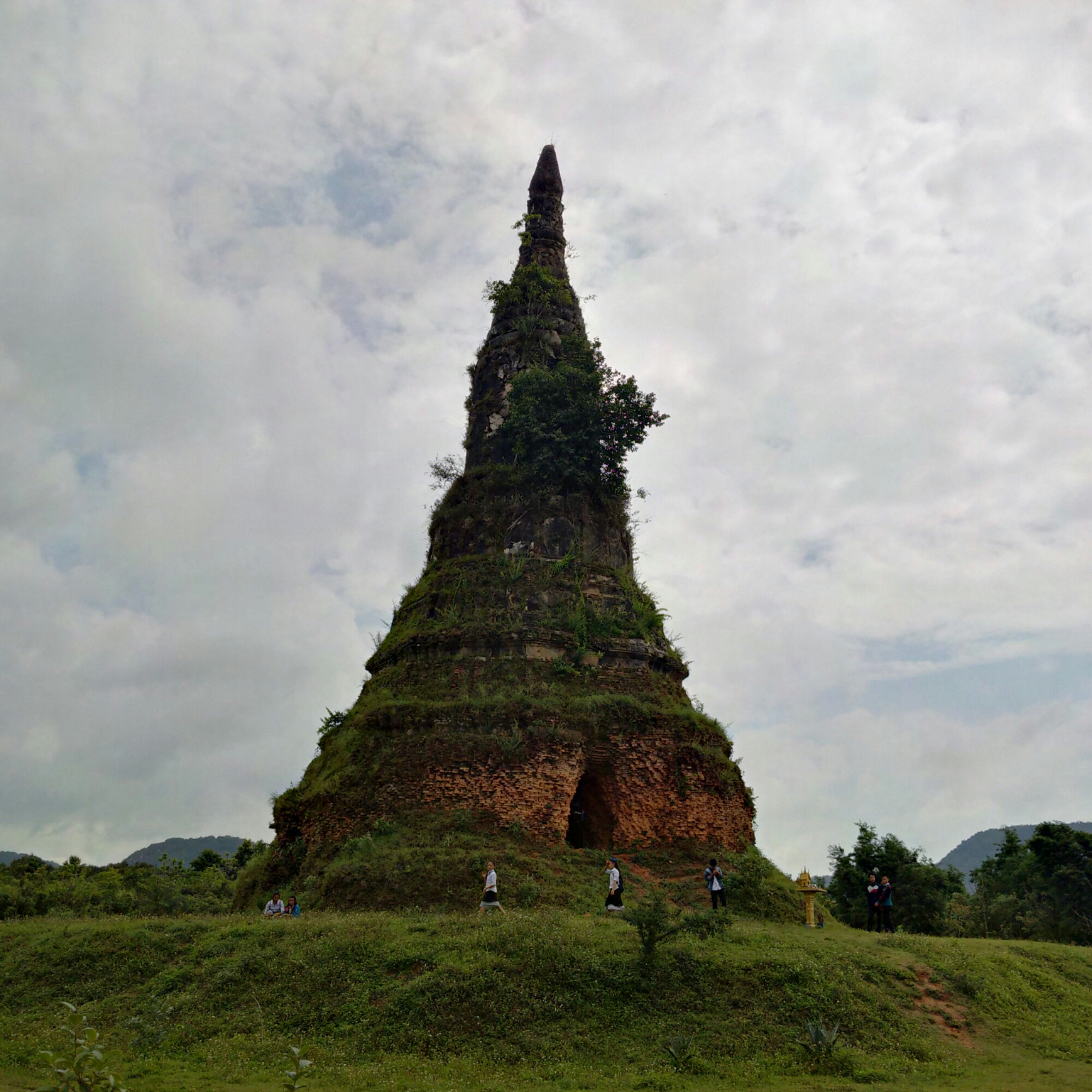
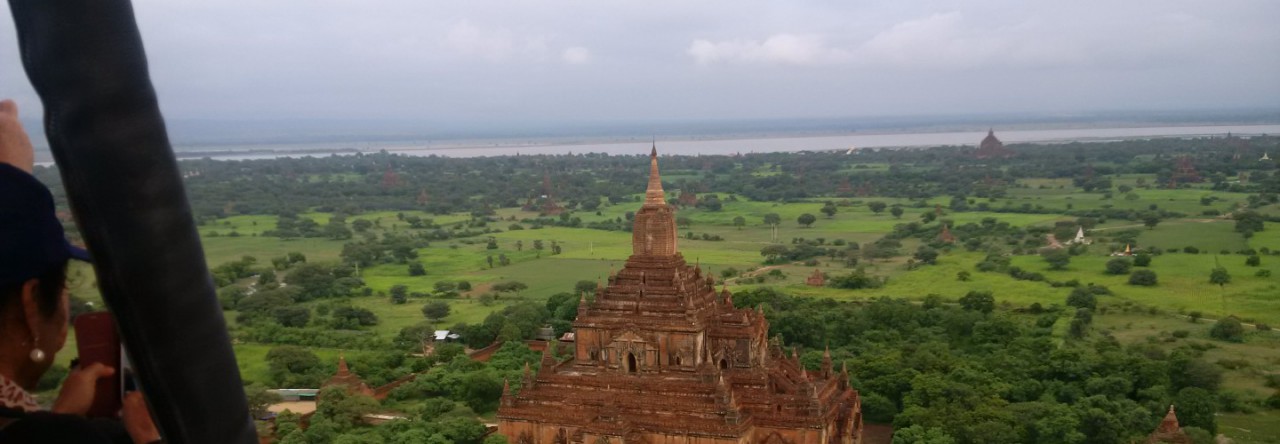
There is plenty of history en route for certain, the striking ruins of centuries old stupas may not rival Bagan for number, but they are no less fascinating and in some ways perhaps more so for being allowed to decay more naturally.

image

Some of the other sights are less welcome. The most obvious primary commodity is wood, and the heavily forested nature of the surrounds is evident with even a cursory glance. Unfortunately the scarring and gaps in the treeline is equally clear, as is the evidence of landslides where the deforestation has removed the binding of the soils. Such logging is illegal and has been for some time, but tacit approval from the authorities meant that it carried on undisturbed, damaging the ecosystem and leaving ugly gaps behind.

More recently efforts to curb this have begun, and the rate of clearance has slowed but not stopped. More sustainable practices have begun to be put in place, though it is too late to disguise the damage done. Laos is hardly unique in this regard, indeed my own island was once almost entirely forested before my ancestors cleared almost all of it – the much vaunted English landscape is manicured and man-made, it is by no means natural.

That is why the worst approach is an external lecture on the rights and wrongs. Although many a visitor wishes to see traditional life in a destination, that does not mean progress can be denied, for a refusal to accept that condemns an entire people to permanent poverty.

And so while deforestation is a major issue, it is not one to lecture about, assistance is more useful, and from a consumer perspective, to buy sustainable wood products.

Similar issues surround the hydroelectric programme throughout the country. Damming rivers unquestionably changes the environment and some species are directly in peril as a result. But Laos gains much needed hard currency through the export of electricity, in particular to Thailand. National income is as essential here as it is anywhere else.

The worst kind of tourist is the one who wishes to preserve traditions in aspic, for the working life of people is through necessity. Humans do aspire and the reality is that backbreaking labour is not the choice of anyone. This does not mean that everything and anything is acceptable of course, but it does mean that opposing the freedom to be able to for example also afford the smartphone the tourist takes for granted is arrogant and immoral.

image

Travelling in the Wet Season

Marketing departments around the world will wince at the title, for they have renamed such a thing over the last few years as the “Green Season”. From a British perspective, this means that at home our green season runs from oh, well January to December really. But when coming to tropical destinations in particular it’s a rather a different matter as rain really does mean rain during the wet season.

So that means you should avoid it of course, right? Well not really, it rather depends. If the plan is to take in a beach holiday, then unquestionably so. There is little as depressing as sitting in your room watching a beach through a downpour. If you are touring however it’s less clear cut. In a country like Laos the rains are an integral part of life, both in terms of agriculture (rice in particular) and the landscape itself. It is what creates the astonishing greenness of the country and fills the rivers that are both visually attractive and a means of traversing the country.

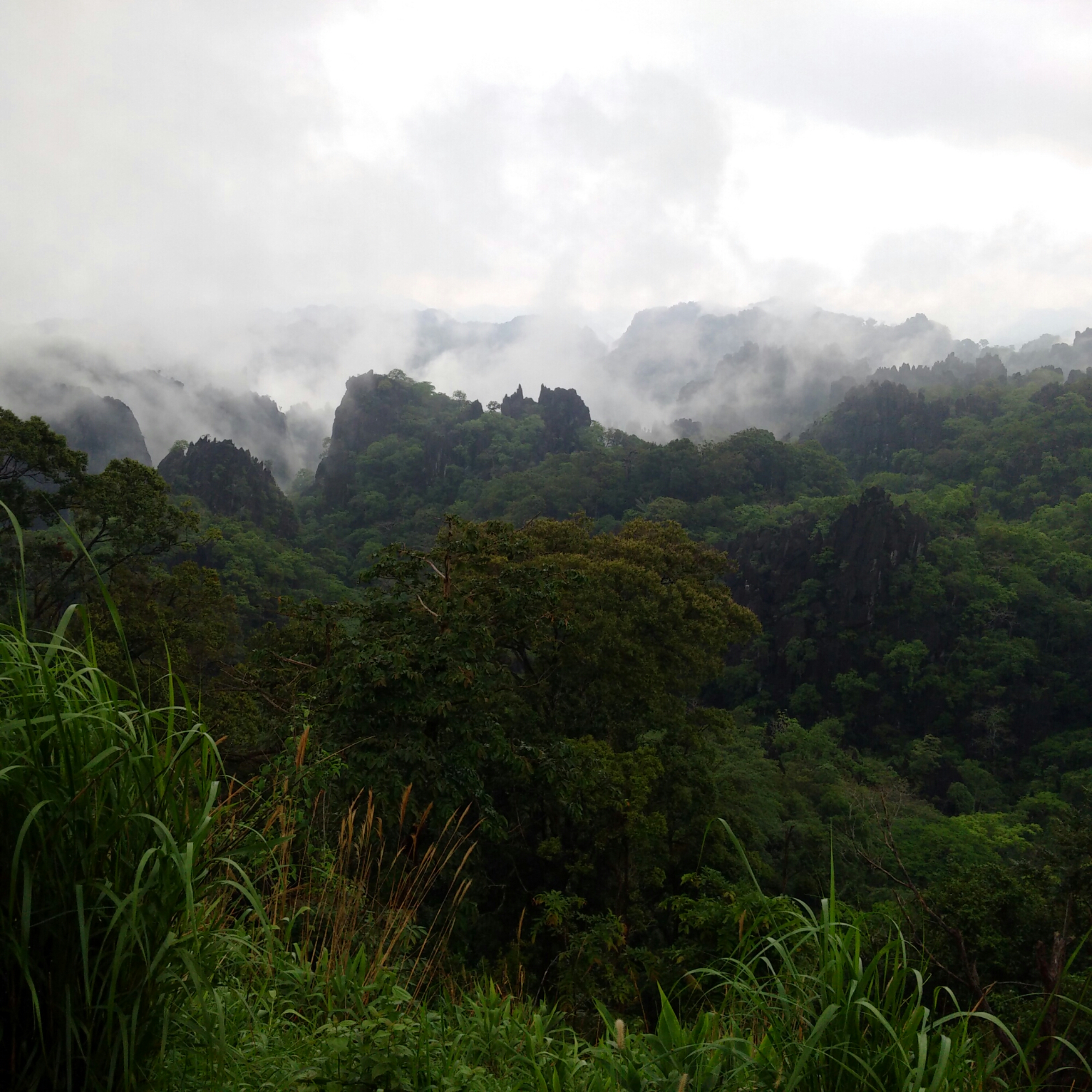
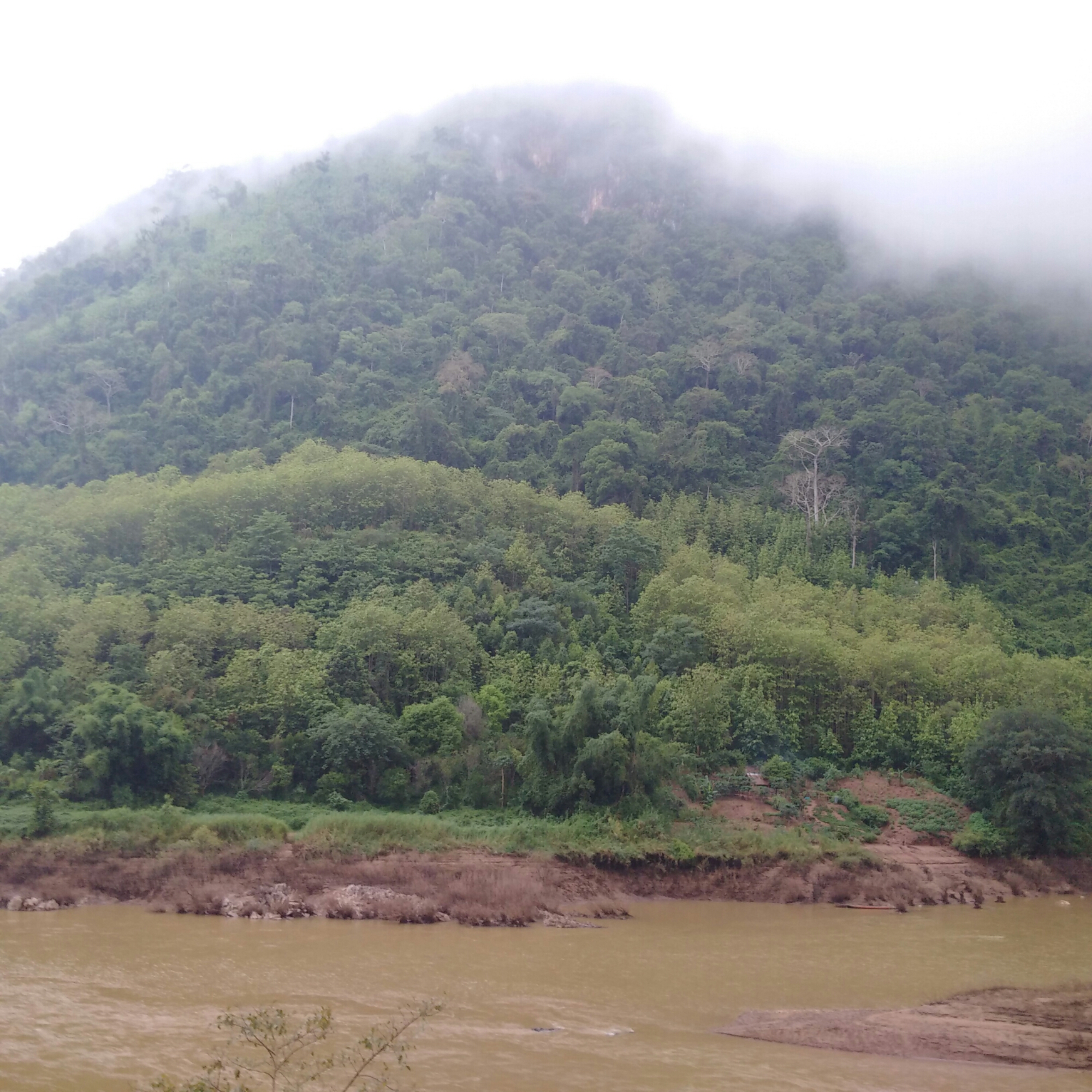
Indeed the low clouds and mist provide many a photo opportunity that isn’t available during the drier months and to some extent show the real Laos in a way that the rest of the year does not.

image

That doesn’t mean it rains all the time, for it certainly isn’t the case, it just means that the potential for a downpour is ever present. Up until recently travelling was problematic between the months of April and September when the heaviest rains fall, but this has improved considerably. And to a Briton or European there is something actually appealing about the glorious spectacle of a tropical downpour.

That doesn’t mean it’s the best time to come of course, it’s low season for a reason. But it is dramatically cheaper and possesses a charm of its own. It is also much quieter. One small tip though – flip flops are often thought of summer wear but if you do come at this time of year, they are the shoes of choice and necessity unless you have waterproof boots, which are best of all for the walks. In particular, if they are river based that means deep puddles and streams to cross. Sitting in soaked soft shoes is no kind of fun.

image

Personally I rather like this time of year and always have. It is cheaper by far which is always a consideration, but more than that it has a real attraction for me. The sounds and sights of a country during this time of year is special. I love it.

image

The Plain of Jars

One of the most pleasurable elements of travelling to new places, particularly relatively unknown places, is the discovery of astounding sites that comparatively few people have visited. This part of Laos, down in the south east corner is not heavily toured by westerners, mostly due to it being difficult to access. Although Phonsavanh does have an airport flying in is not recommended at the present time so while the Plain is a mere fifteen minutes by car from town, getting here in the first place does require time and effort. This is a lengthy journey no matter where you are coming from, which is why it tends to be as part of a wider more involved itinerary.

It has to be said that whoever named it the Plain of Jars clearly new how evocative that sounded, for it is hard to conceive of a more intriguing title or one to make the visitor more look forward to seeing it, no matter how ignorant in advance one might be.

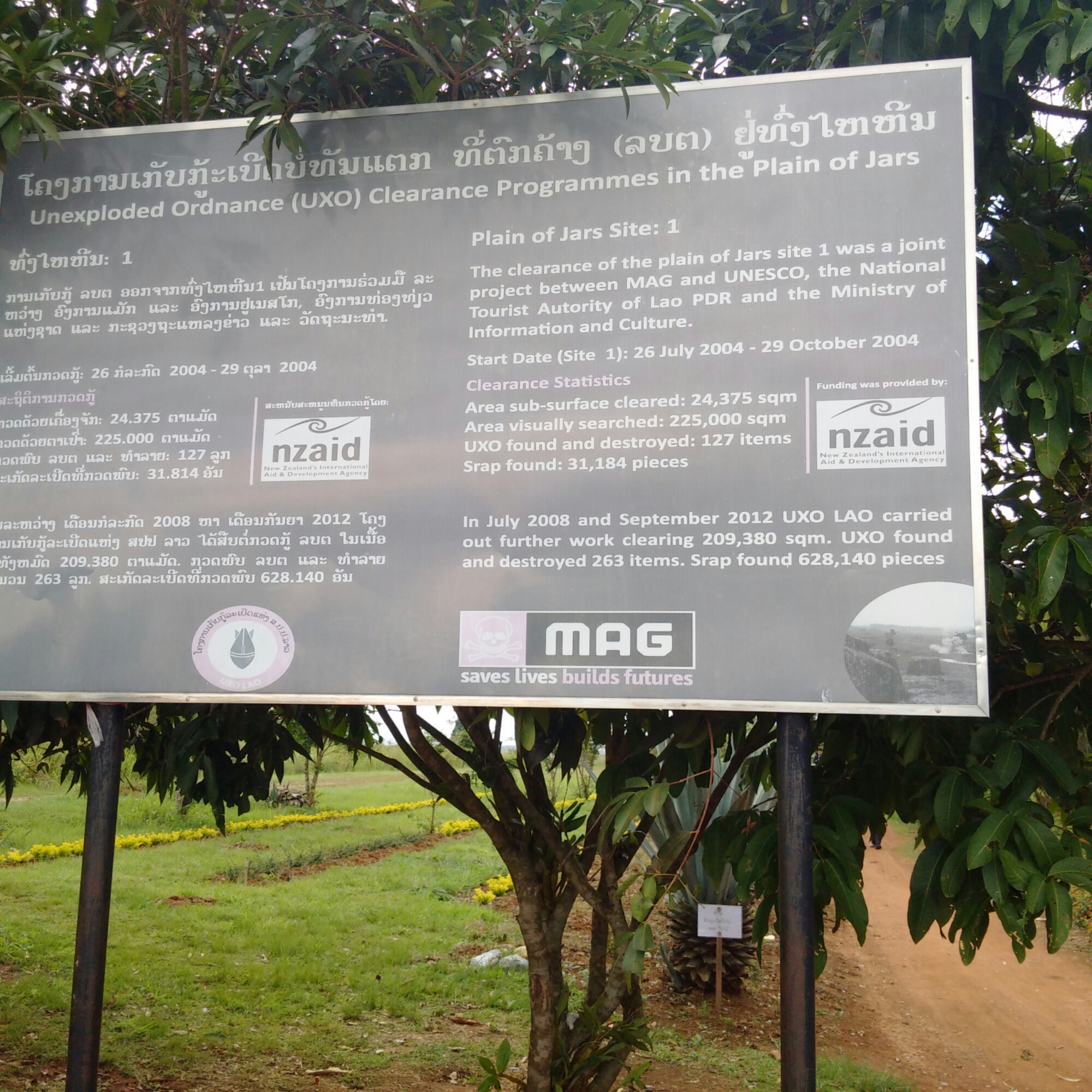
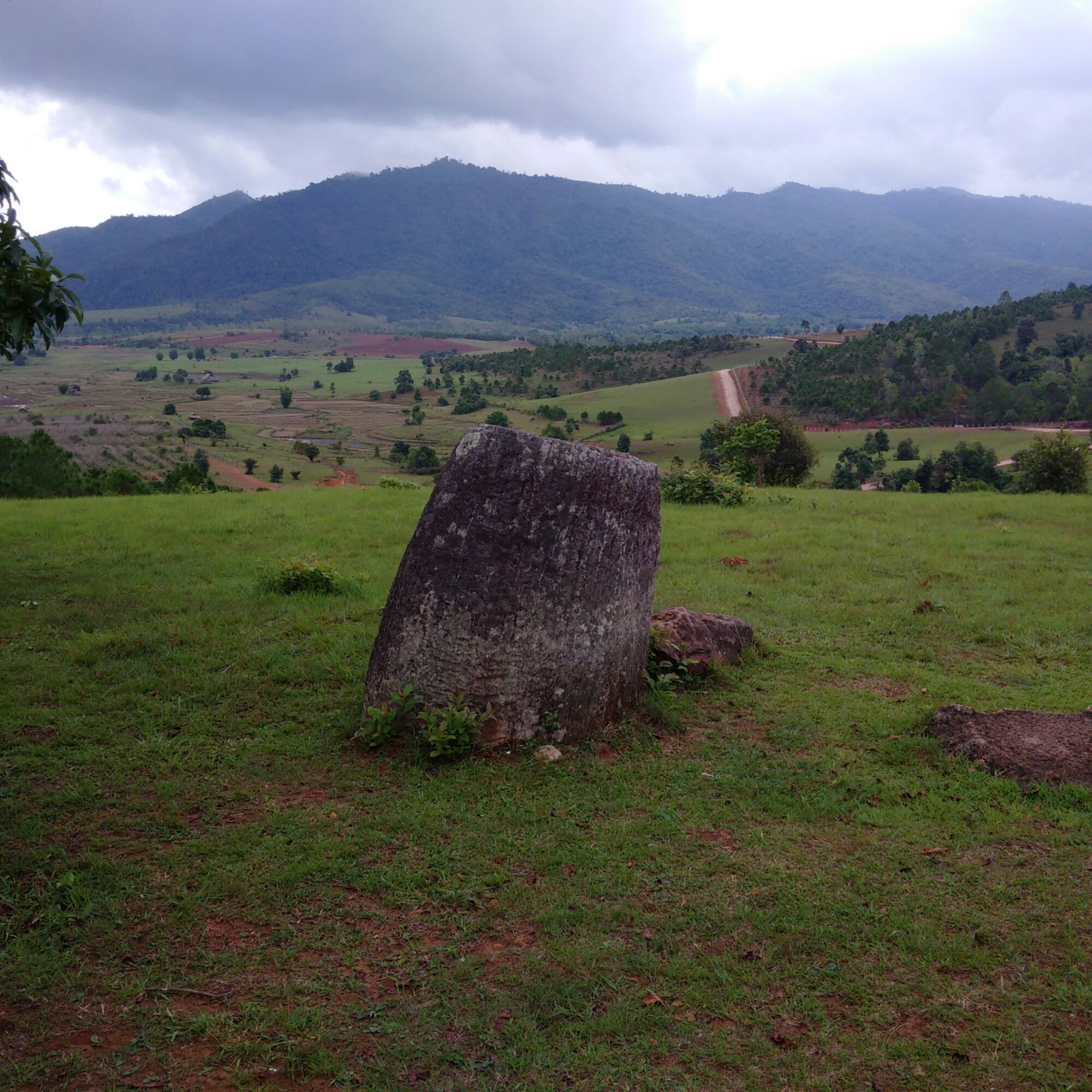
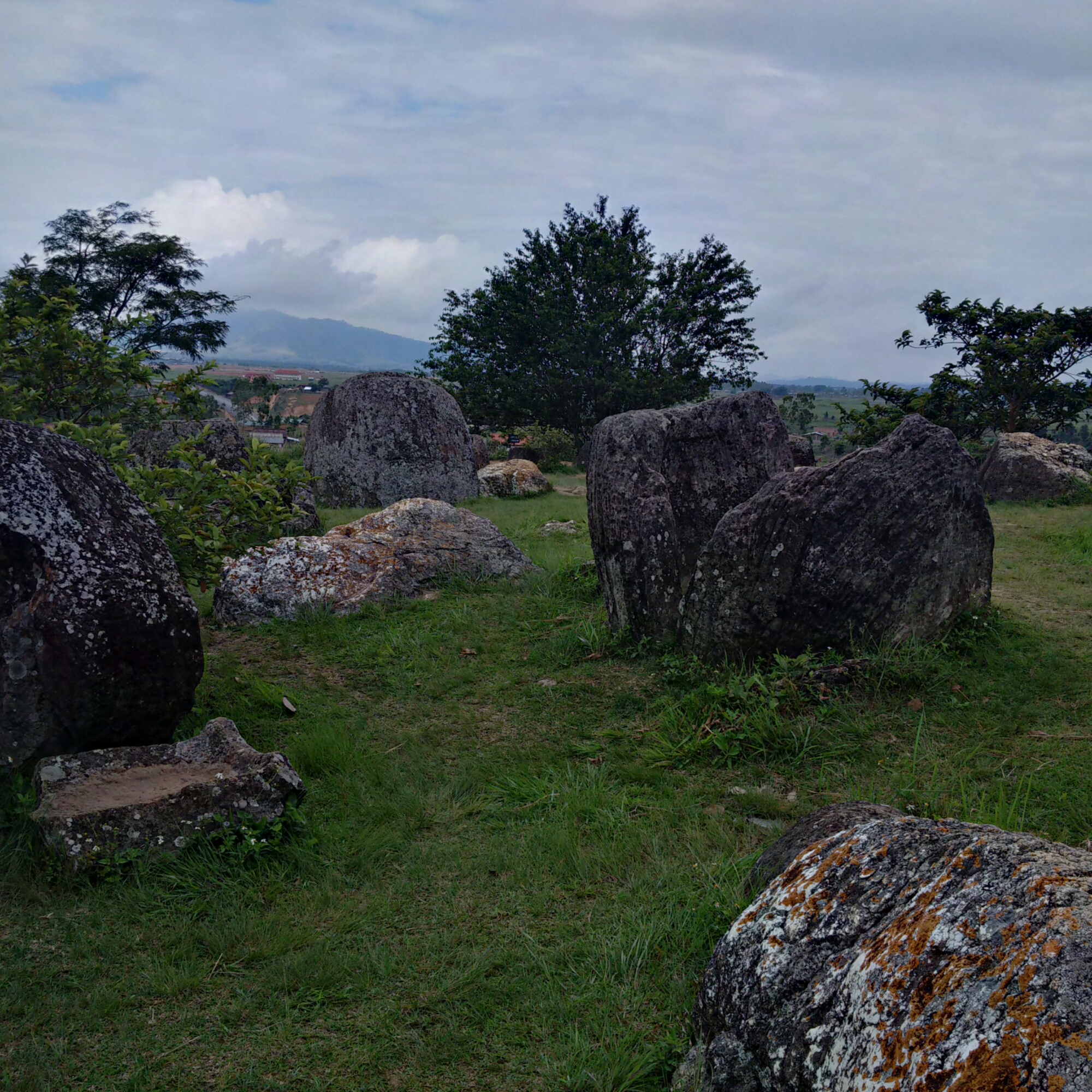
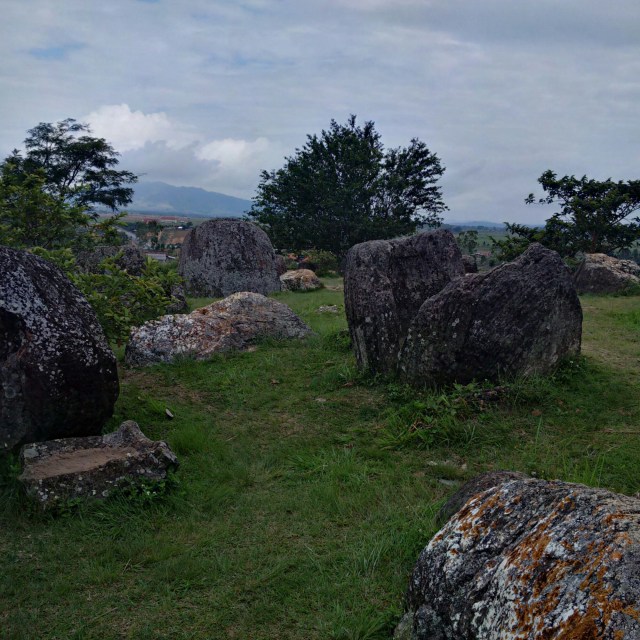
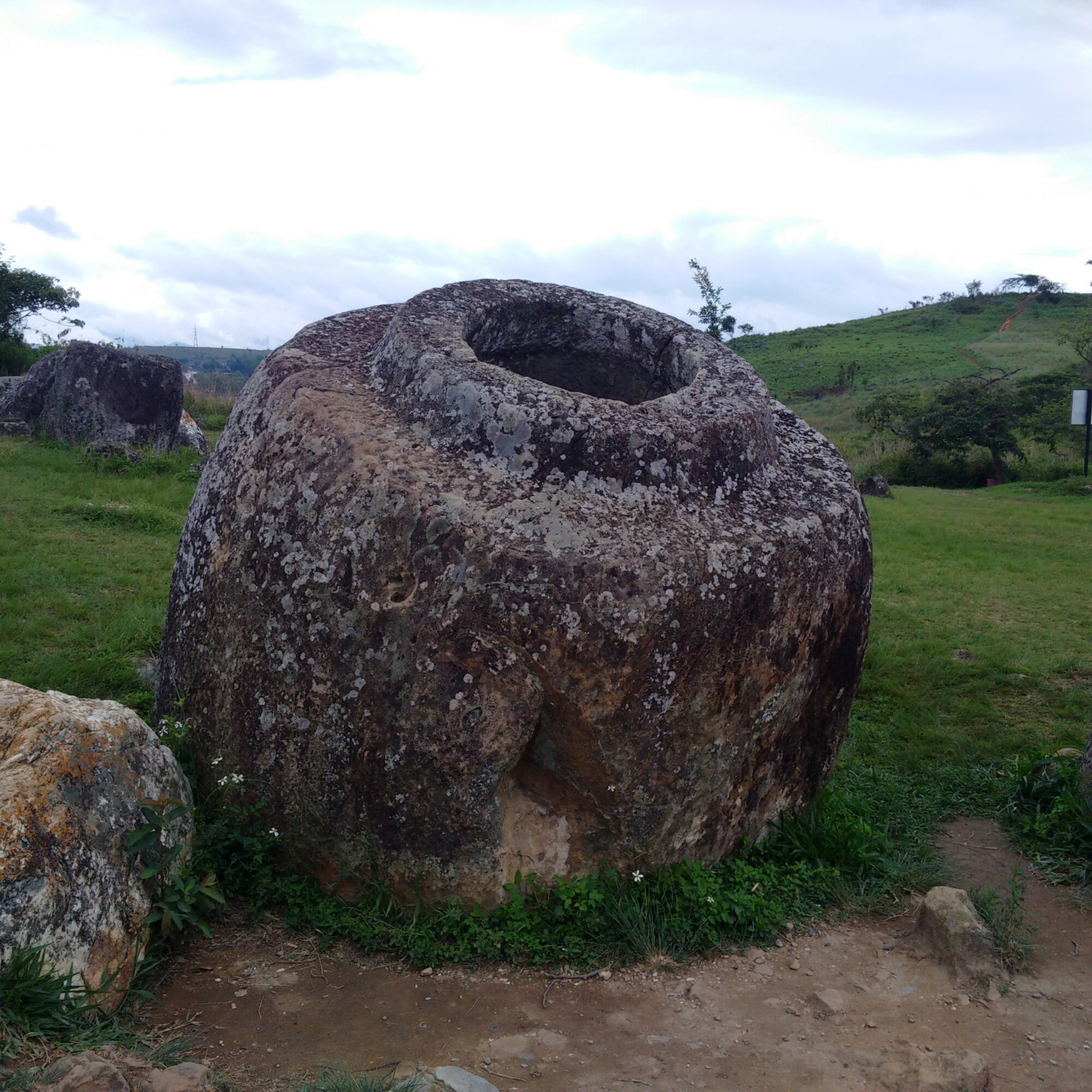
In outline these are large iron age stone jars, probably part of a burial ritual. There are hundreds of them dotted over the landscape, in varying states of repair. Some of the damage is historic, some is rather more recent as the area was heavily bombed by the Americans as part of the wider conflict in Laos that served as an adjunct to the Vietnam War. Trenches and bomb craters surround many of the sites, a powerful reminder of the troubled recent history.   Indeed, access to many of the sites is restricted as a result of the dropping of vast numbers of anti-personnel mines, with mine clearance an ongoing process nearly half a century later. Only marked paths are safe to follow and only in some locations. A cleared mine is marked with a white post, while a red post indicates identified but yet to be cleared ordnance. It is unlikely a tourist would ever see one of the latter, but the tourist is not the one who lives here. Local people will, and worse those that haven’t been found at all.

For us, it is a brief visit. For those who live here, it is a daily danger.
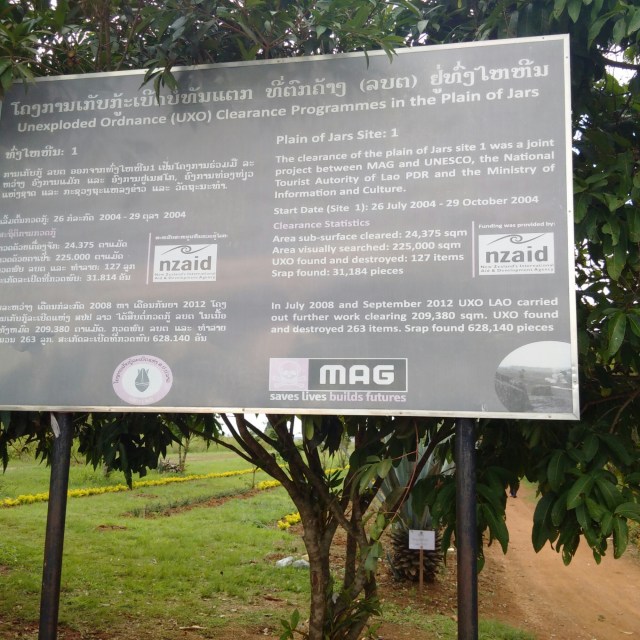
image

There are three main sites open to tourists, although additional ones have begun to be accessible to greater or lesser degrees. Because of the remoteness, it has the attraction of being less crowded than perhaps it deserves. As ever, this is a double edged sword. In future years the popularity will increase, potentially leading to damage (graffiti is already noticeable) but bringing in much needed revenue to the local economy as well.
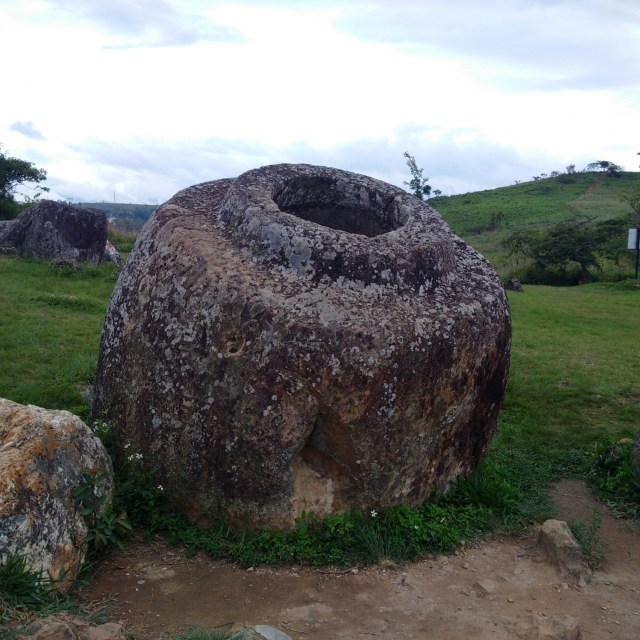
image

One of the local traditions is that the jars were placed there by a race of giants for whom they were cups containing alcohol. The reality may be less certain and undoubtedly more prosaic, but the tradition has an appeal that all legends do, and perhaps it is the one to pretend to believe.

Excavations have revealed that burials were made next to the jars and it seems likely that they formed part of that process. Nearby there is a cave with a hole in the roof that may have been a crematorium. Again, there is limited knowledge and as is always the case it is likely we will never know for sure.
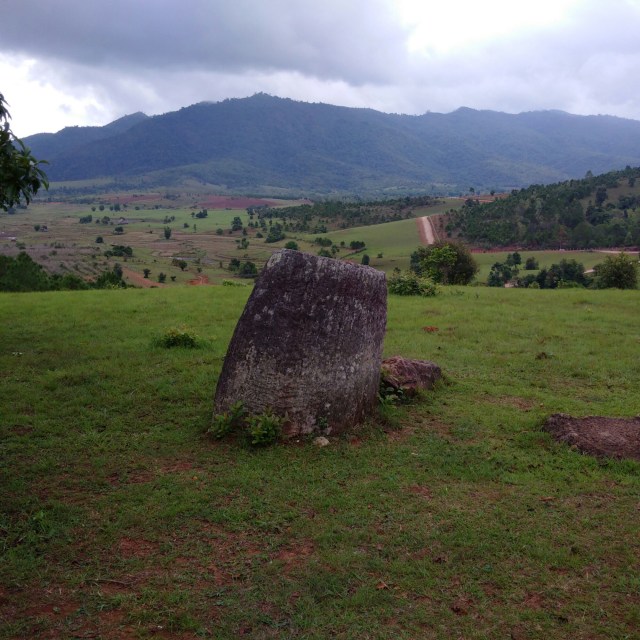
image

This is a special place to come. The effort required makes it somewhere relatively few will put on their list, but it rewards the effort wonderfully. No doubt in future as improving links and infrastructure brings more tourists it will become busier. For now it is one of those wonderful secret places that is a privilege to visit. Mass tourism brings so many wonderful benefits to an area, so it is nothing other than selfishness to rejoice in seeing somewhere away from the wider visiting public. Encouraging people to visit is part of that process, for it will become more popular in the years to come. And thus, put it on your list, and do it soon.
image

The hinterland

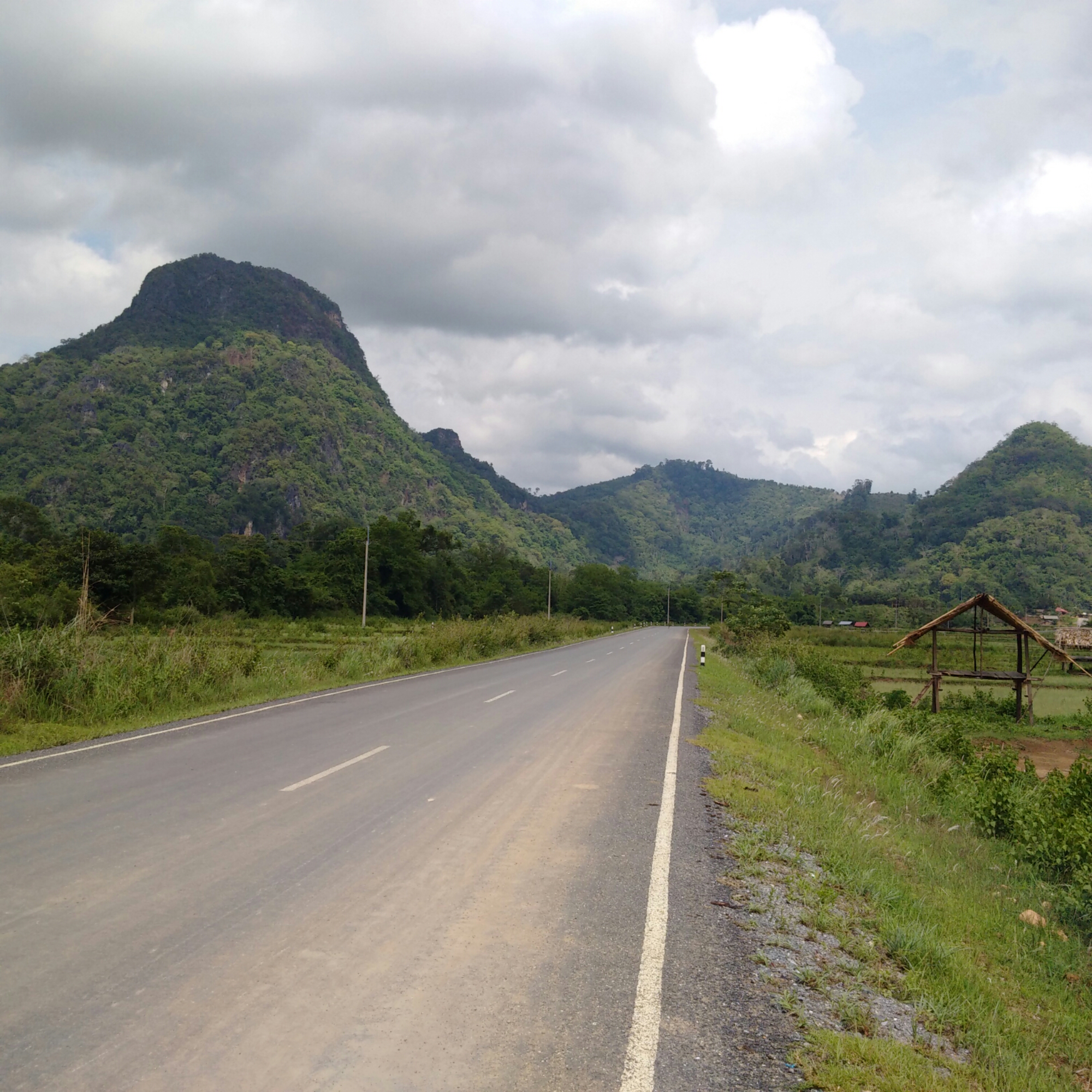
Lao roads are not great. Travelling takes an inordinate amount of time, potholes are frequent and the average speed is rather slow. It needs to be said so that when gauging distances there is the understanding that it’s not going to be like driving along the motorway. Much of the country is mountainous so bends and corners are frequent. On the plus side those with a fear of heights needn’t generally worry about precipitous drops a few feet away, they are comfortable enough from that perspective.

It does however mean that a lot of driving is going to be on the agenda. The route round to Phonsavanh will take around 12 hours in the car and so such itineraries are usually for four or five days. It is quiet and undeveloped with outstanding opportunities for trekking, travelling along the rivers, seeing wildlife (including tigers) and perhaps most of all taking in the often stunning views.

Most of the country is mountainous, and with a low population density even in the more built up areas the unspoilt nature of the terrain is a key attraction.
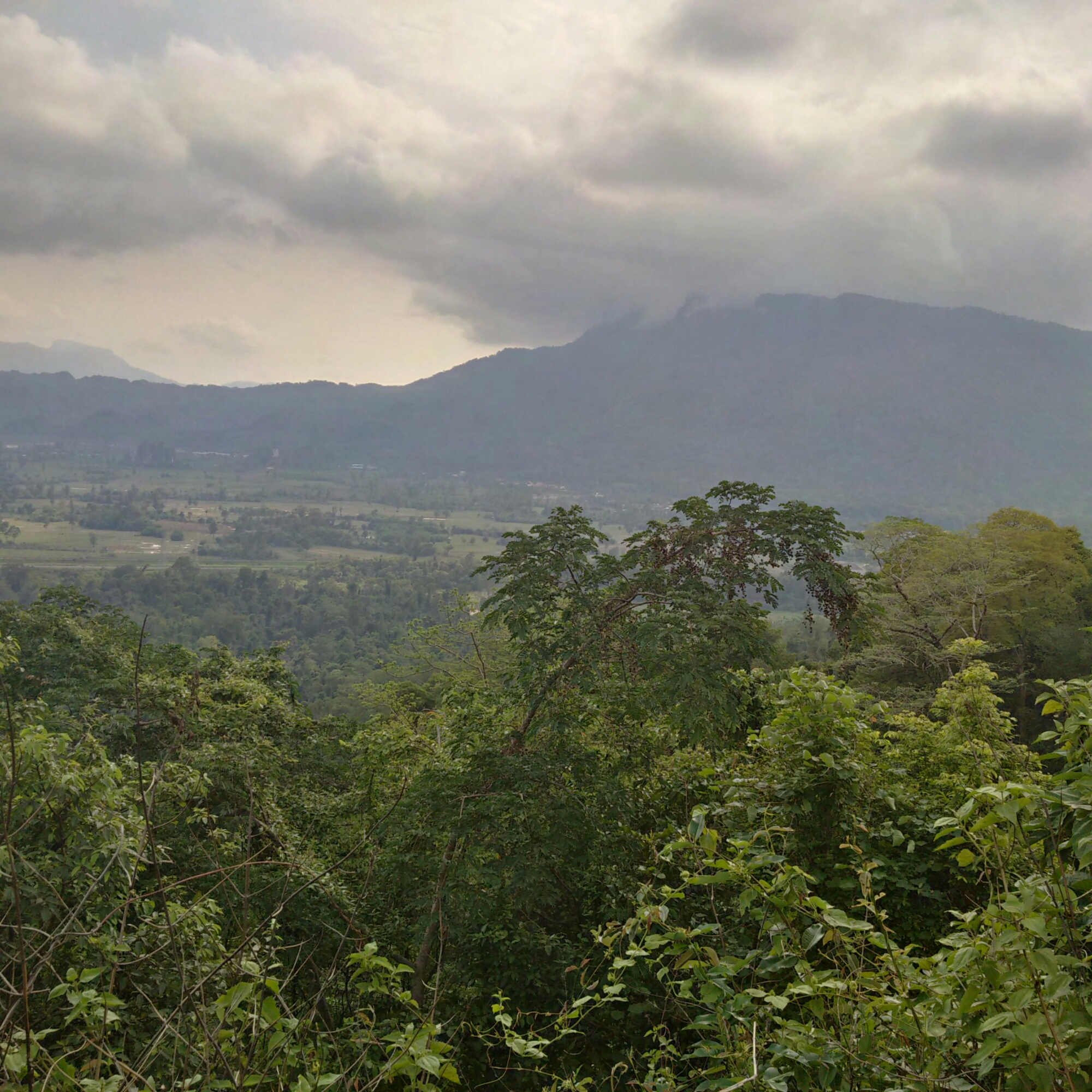
In truth the first part of the journey from Luang Prabang to Nong Khiao is the least eventful of the coming days, although almost instantly you can see the hills beginning to rise up ahead, and the road takes on a distinctly upward trajectory.
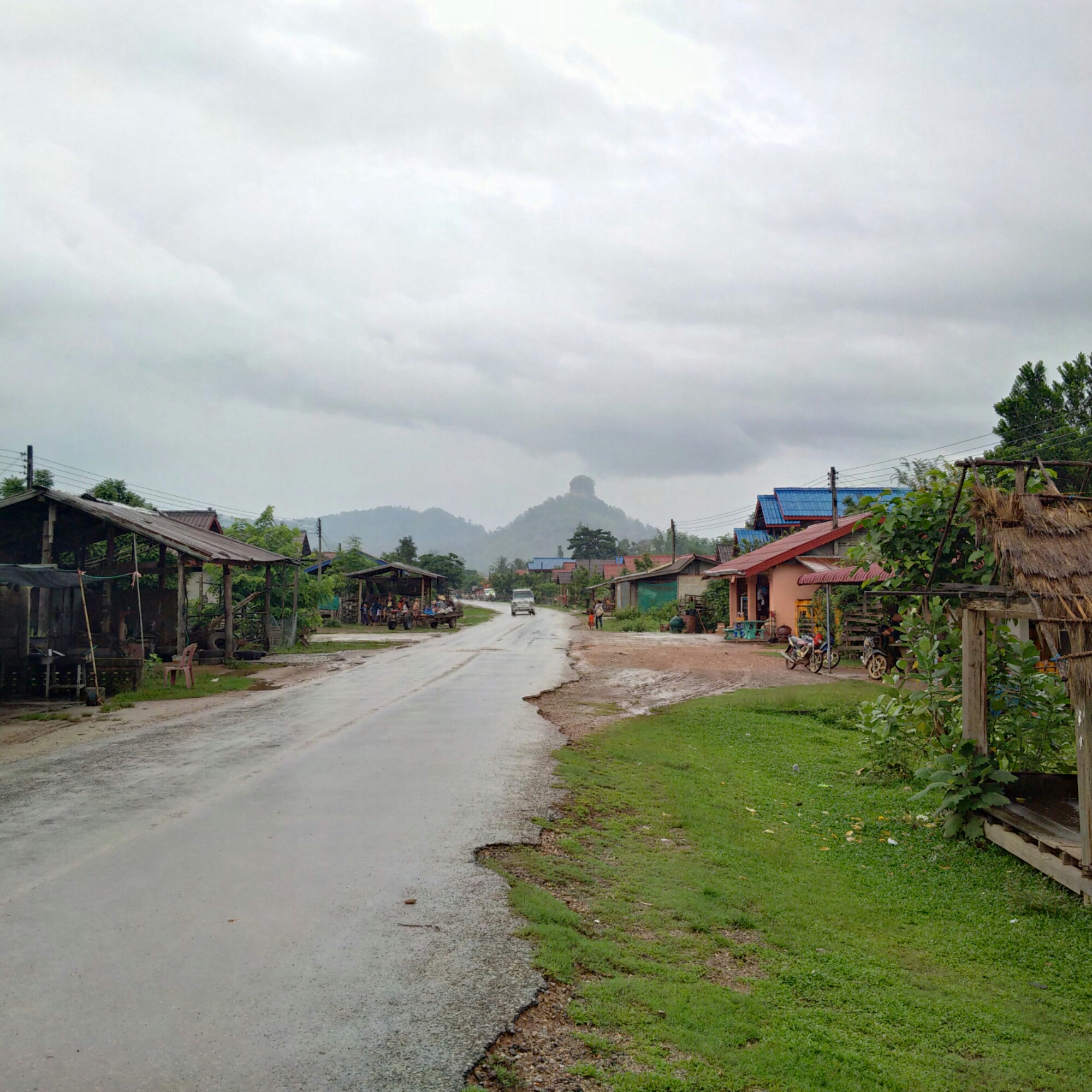
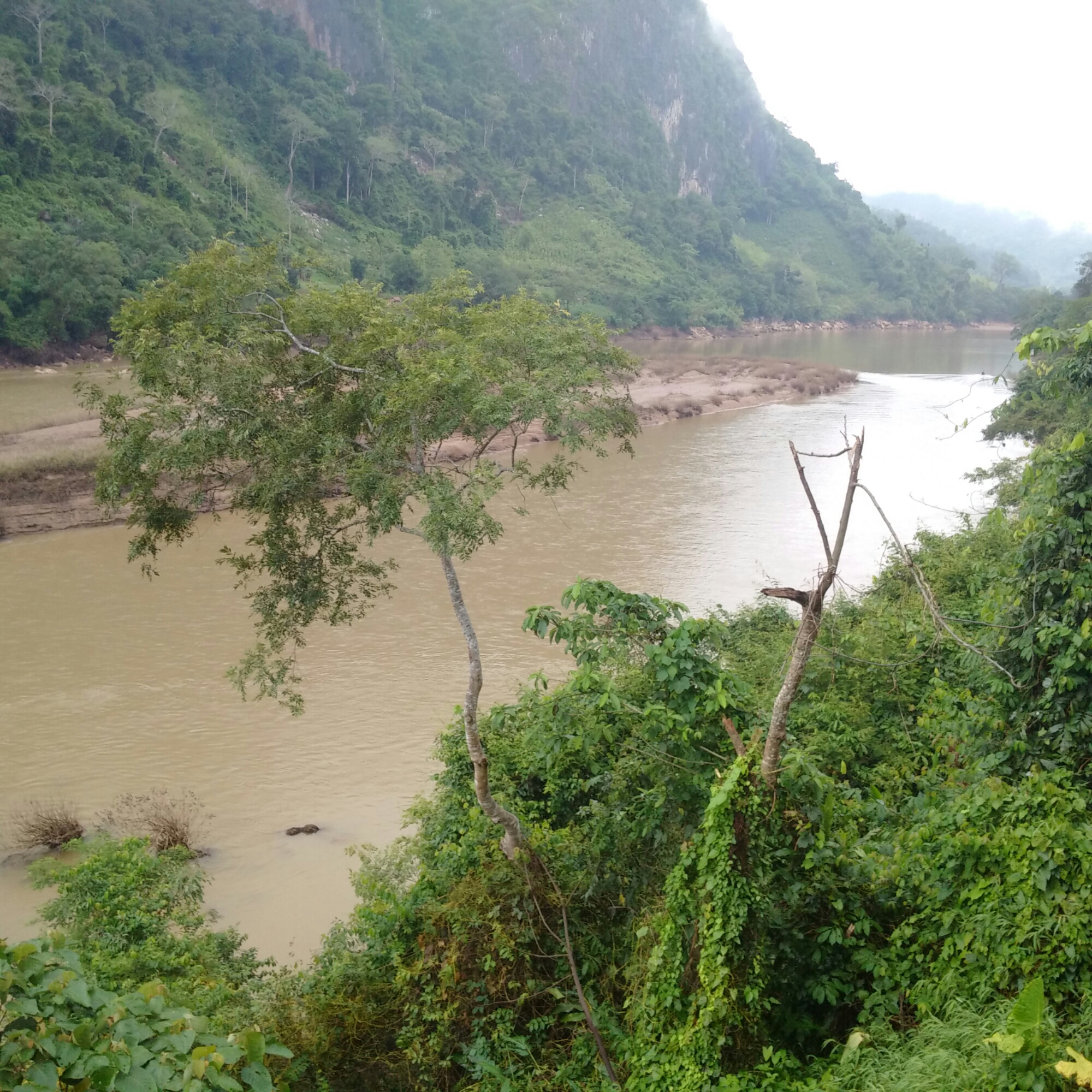
There’s a definite sense of heading into the wilderness, as the number cars and bikes on the road declines and the surroundings become more natural and quieter. The Laos climate means that it’s exceptionally green of course and that also means lots of rivers too. That’s abundantly clear at the first stop, Nong Khiao. It’s only a small place, two streets in reality, but the views are spectacular as it overlooks the Nam Ou river and nestles beneath mountains. It’s a hiking paradise and there are also various river activities as well.

image

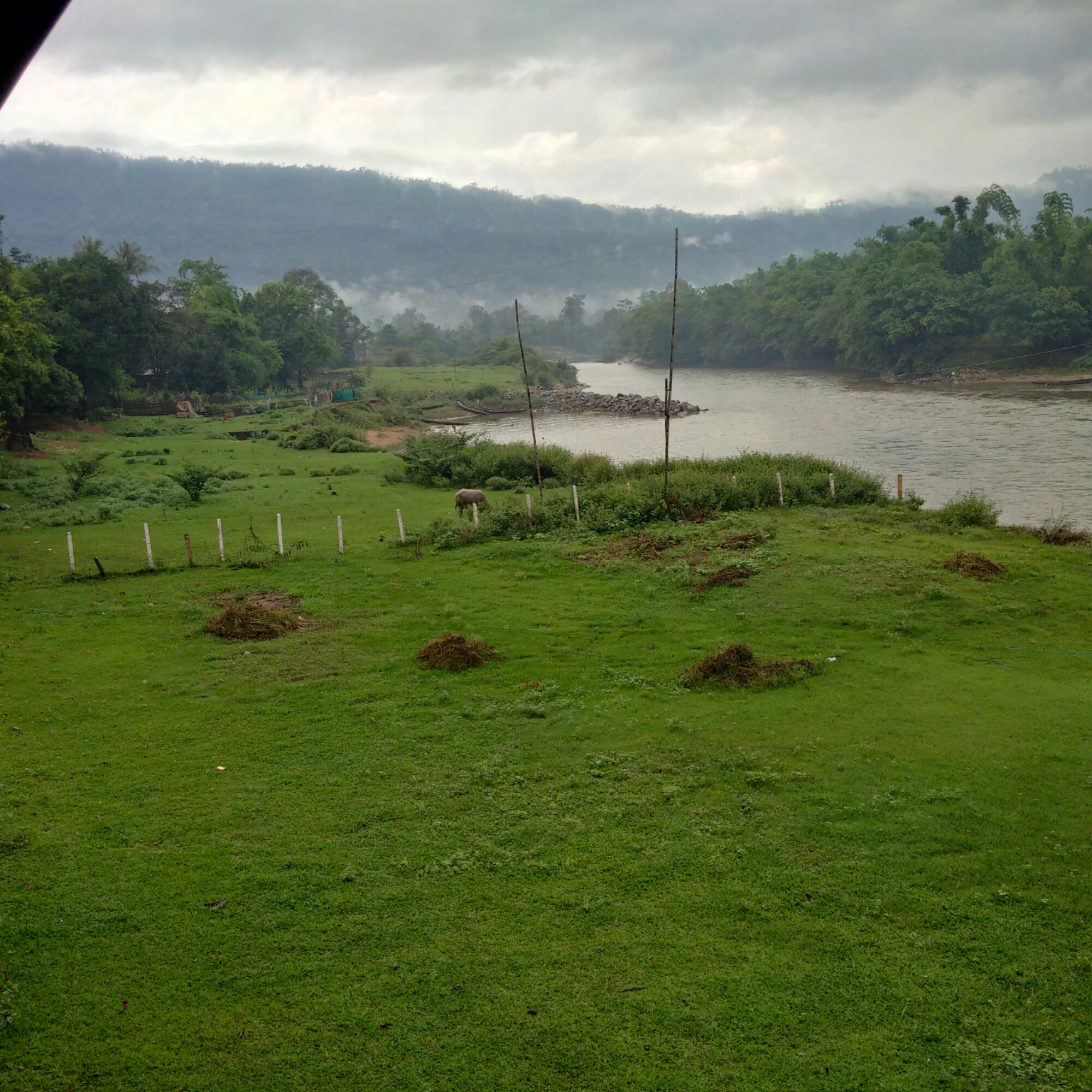
Morning is a particular time to take in the surrounds, the often misty outlook providing an arresting way to start the day.

image

image

As an added bonus I made a new friend in the hotel at breakfast time.

image

It’s typical to spend a couple of days here, it’s very much a retreat from the normal busy world. However, in my case it was already time to move on…